
No products in the cart.
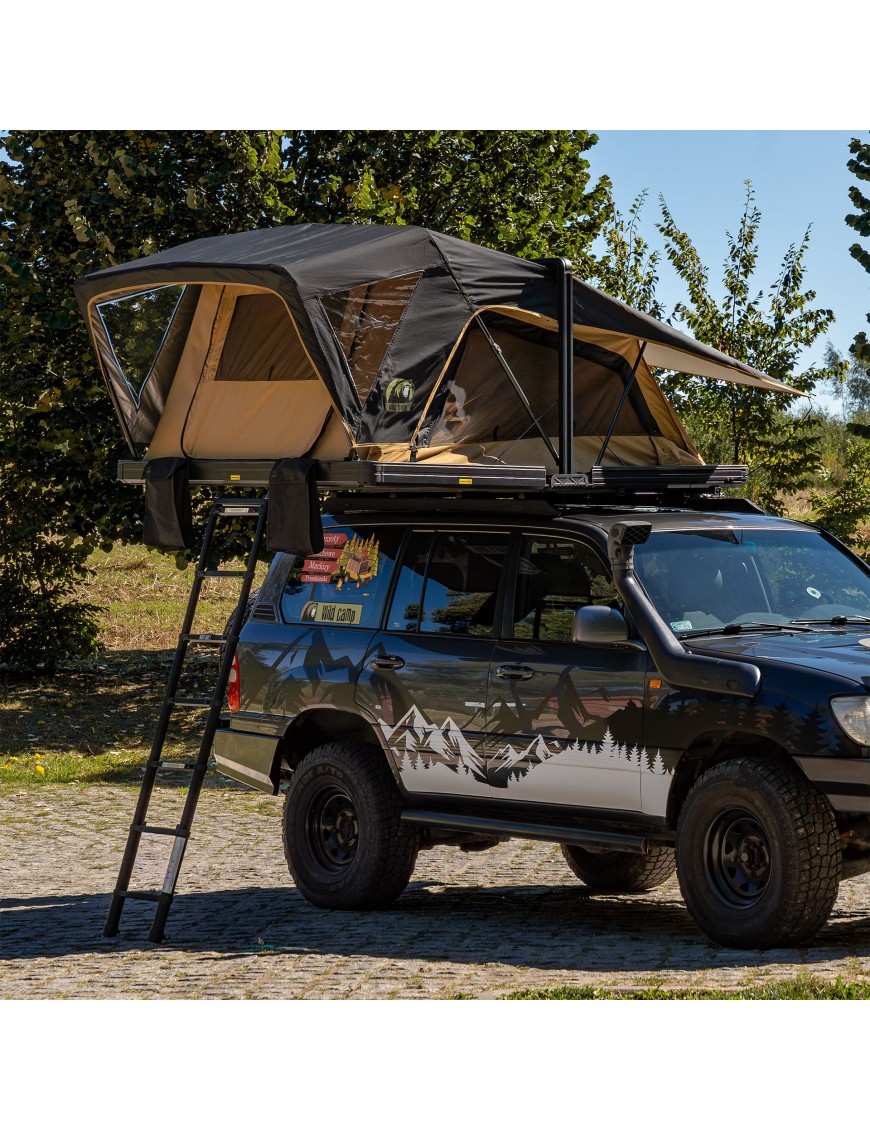
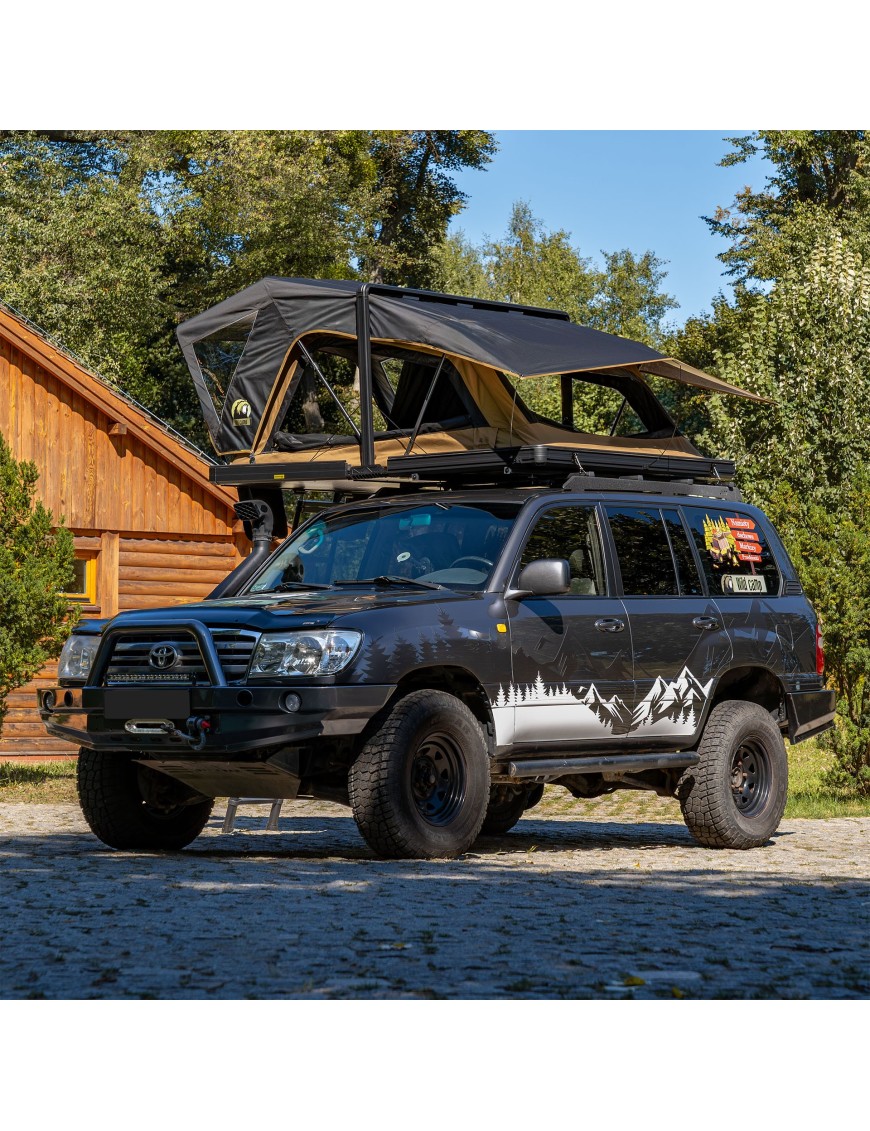
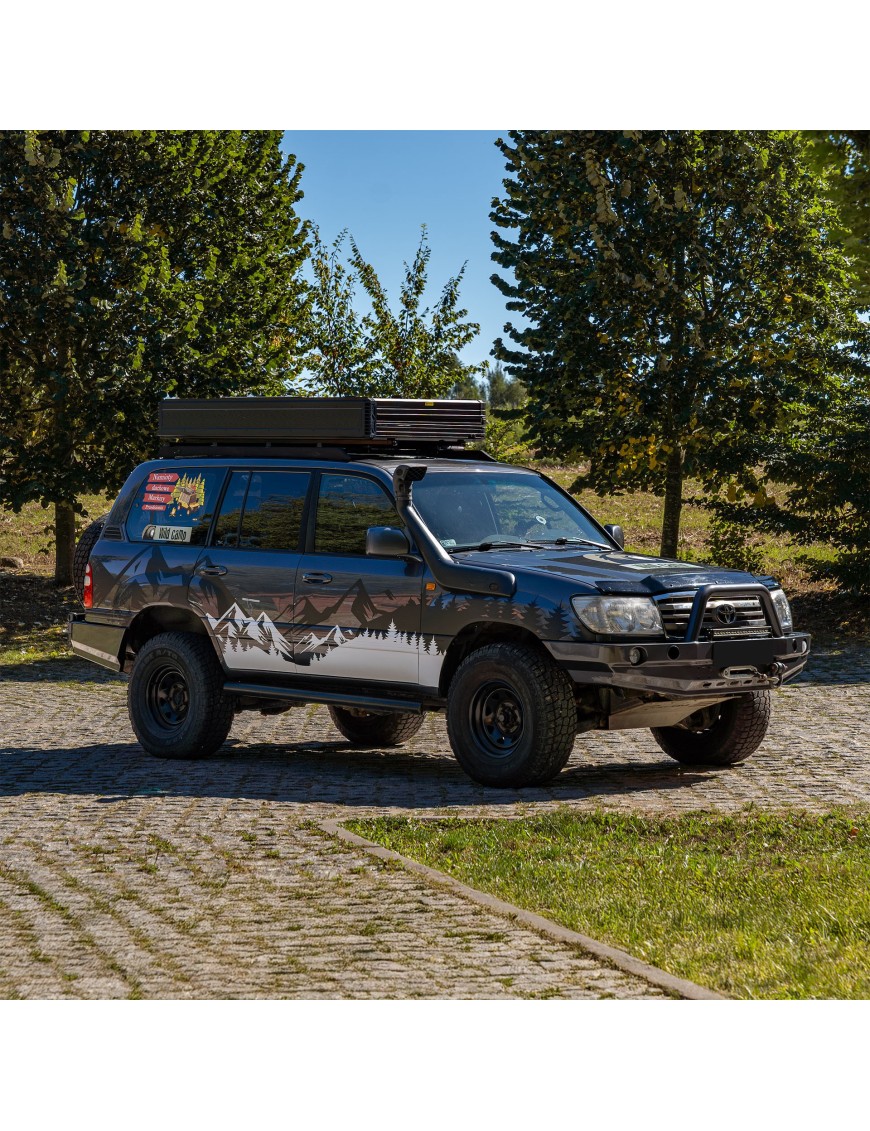
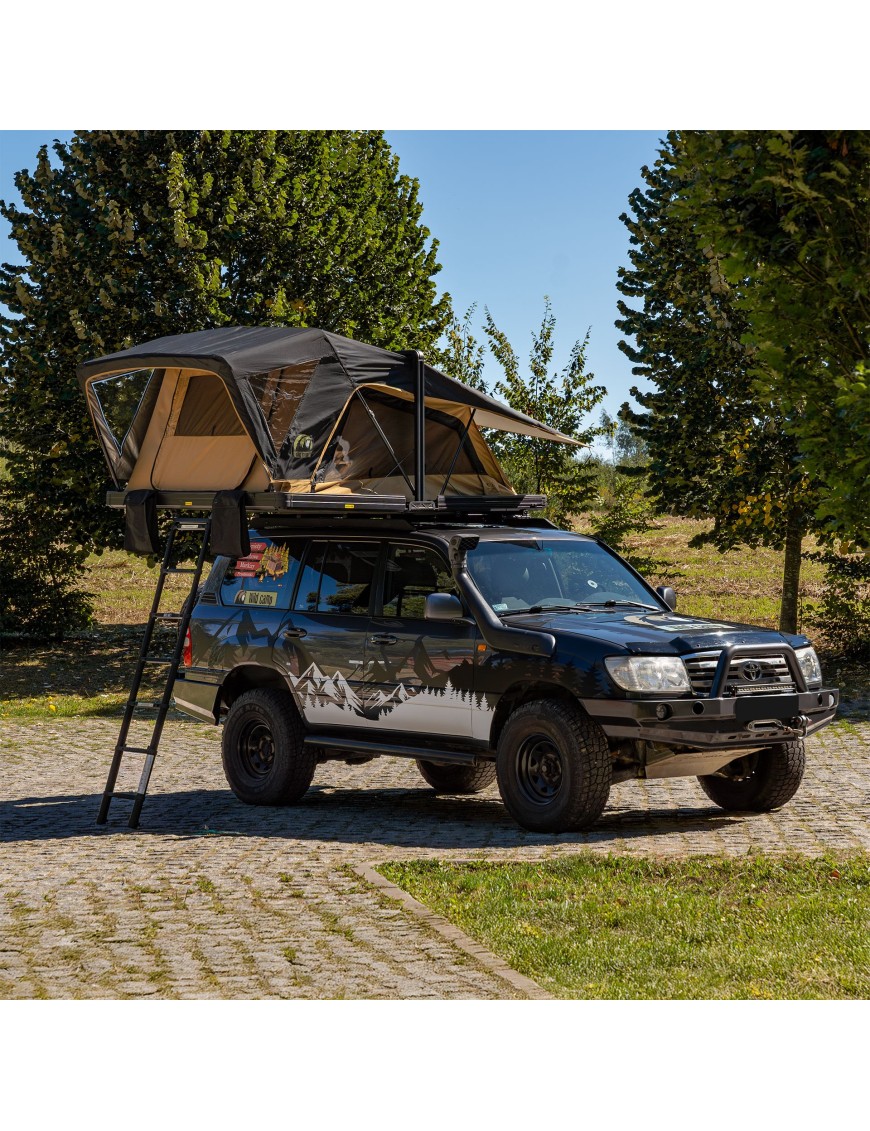
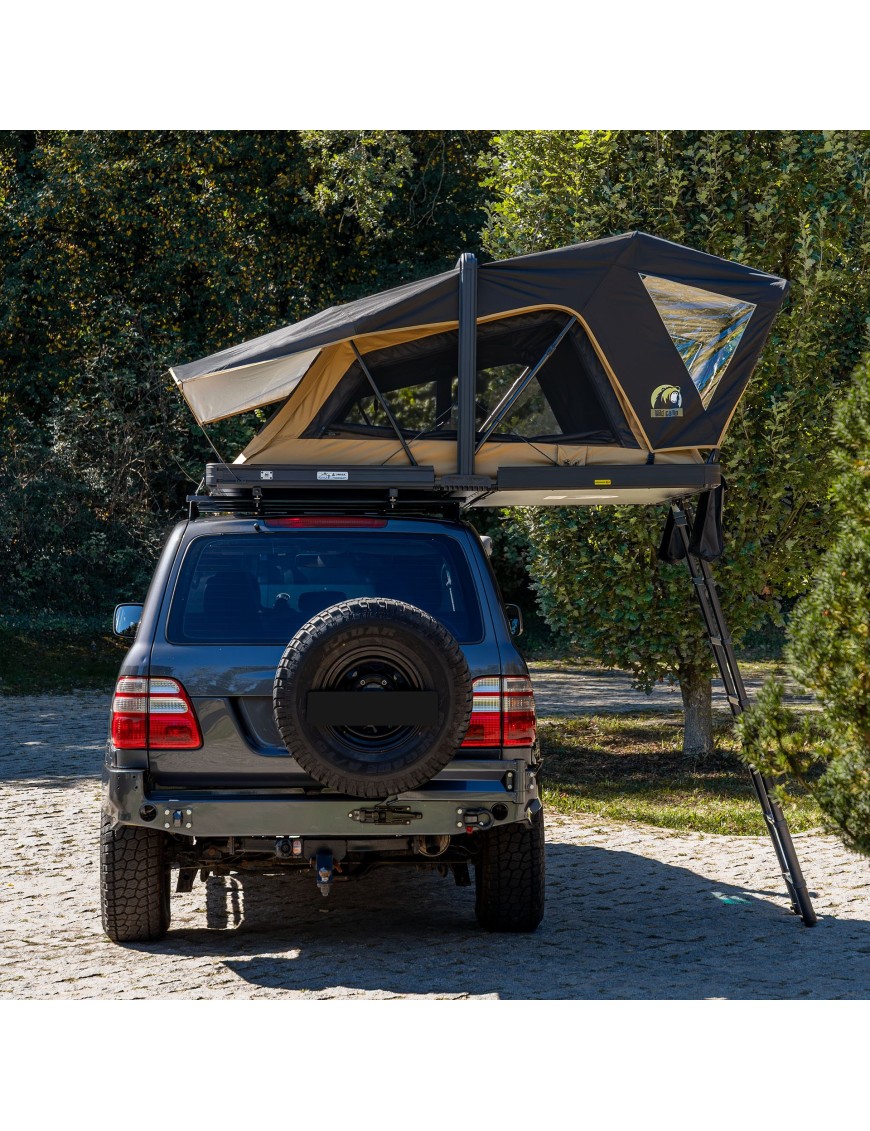
Namiot dachowy Wild Camp Nevada to solidny i funkcjonalnym namiot, który zapewni komfort podczas podróży.
Kolor namiotu military


 Security policy
(edit with the Customer Reassurance module)
 Delivery policy
(edit with the Customer Reassurance module)
 Return policy
(edit with the Customer Reassurance module)
Namiot dachowy Nevada 180 Military Day&Night 2.0
Materiał DAY&NIGHT 2.0 to:
materiał znacznie grubszy i bardziej odporny na uszkodzenia. 100% zaciemnienia wnętrza.
Namiot dachowy Wild Camp Nevada posiada wytrzymałą obudowę ochronną wykonaną z wysokiej jakości materiału, która zabezpiecza wnętrze przed uszkodzeniami mechanicznymi oraz niekorzystnymi warunkami atmosferycznymi.
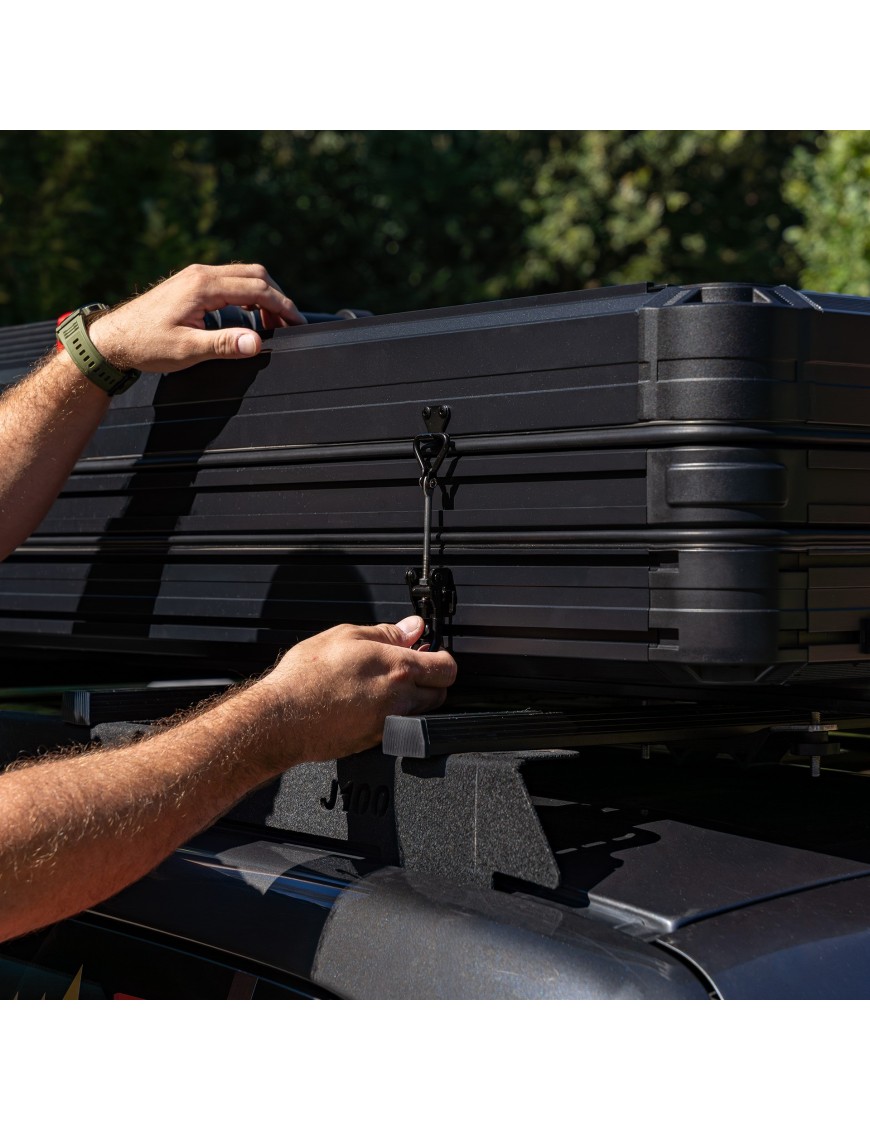
Na obudowie namiotu znajdują się dwa zatrzaski, które zabezpieczają namiot przed niepowołanym otwarciem i pełnią funkcję dodatkowego zabezpieczenia. Posiadają specjalne otwory umożliwiające założenie kłódek ochronnych, co skutecznie chroni wnętrze namiotu oraz jego wyposażenie przed niepowołanym dostępem, dając poczucie bezpieczeństwa podczas pozostawiania pojazdu bez nadzoru.
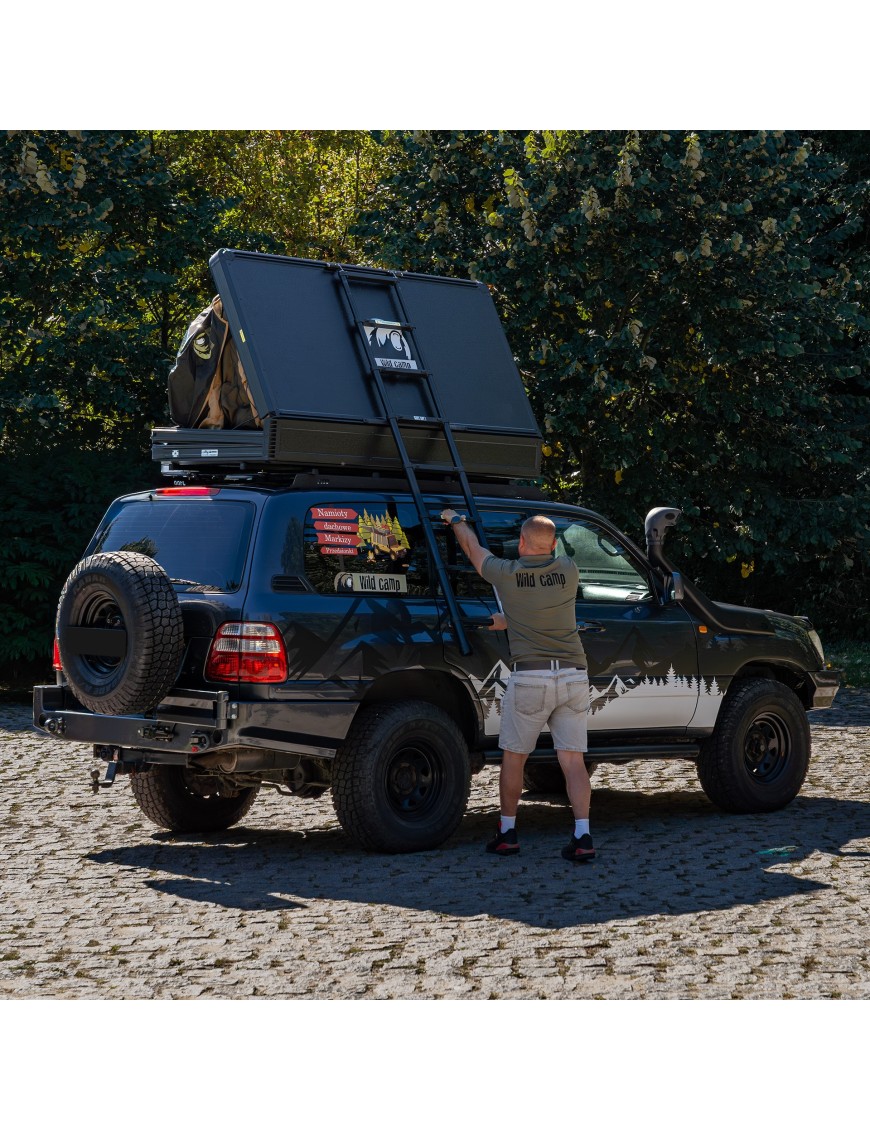
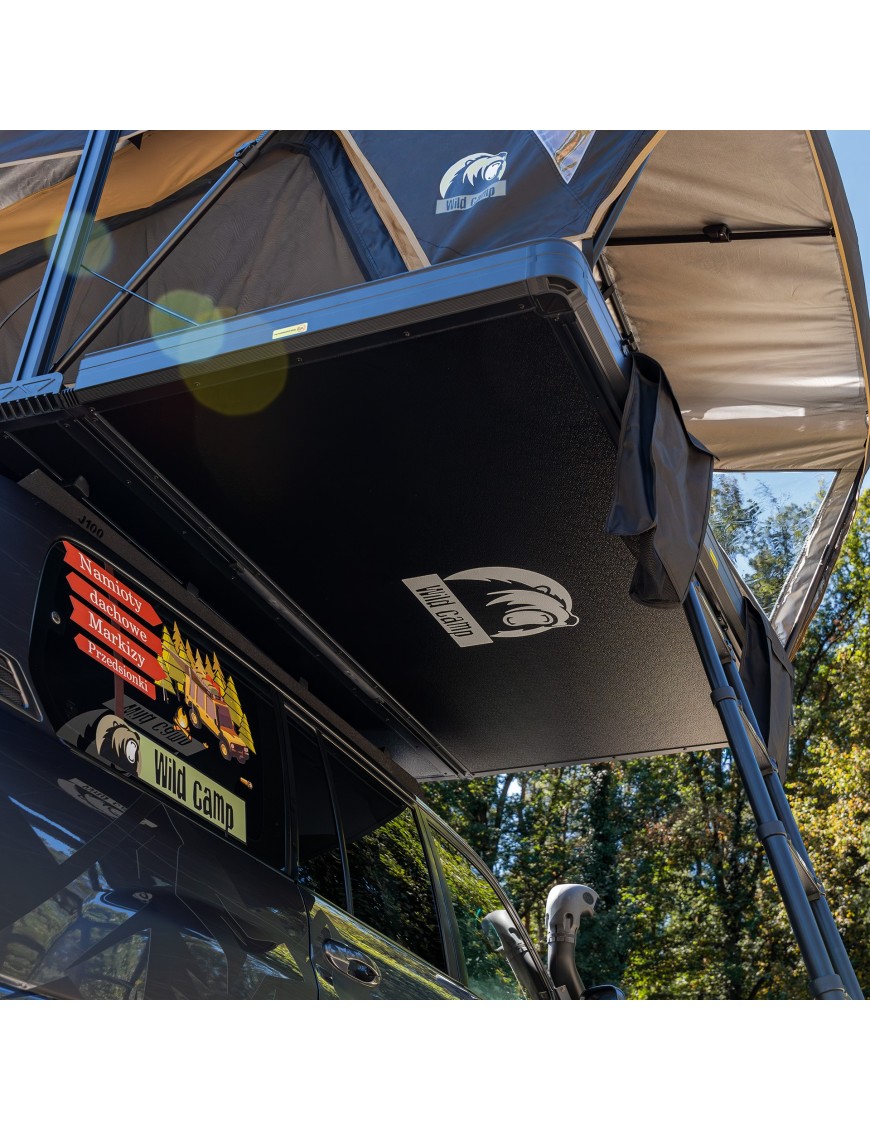
Stopnie drabinki ustawiono pod kątem, co zwiększa wygodę podczas wchodzenia i schodzenia z namiotu. Taka konstrukcja sprawia, że stopa naturalnie układa się na powierzchni stopnia, zapewniając stabilność i komfort nawet przy częstym użytkowaniu.
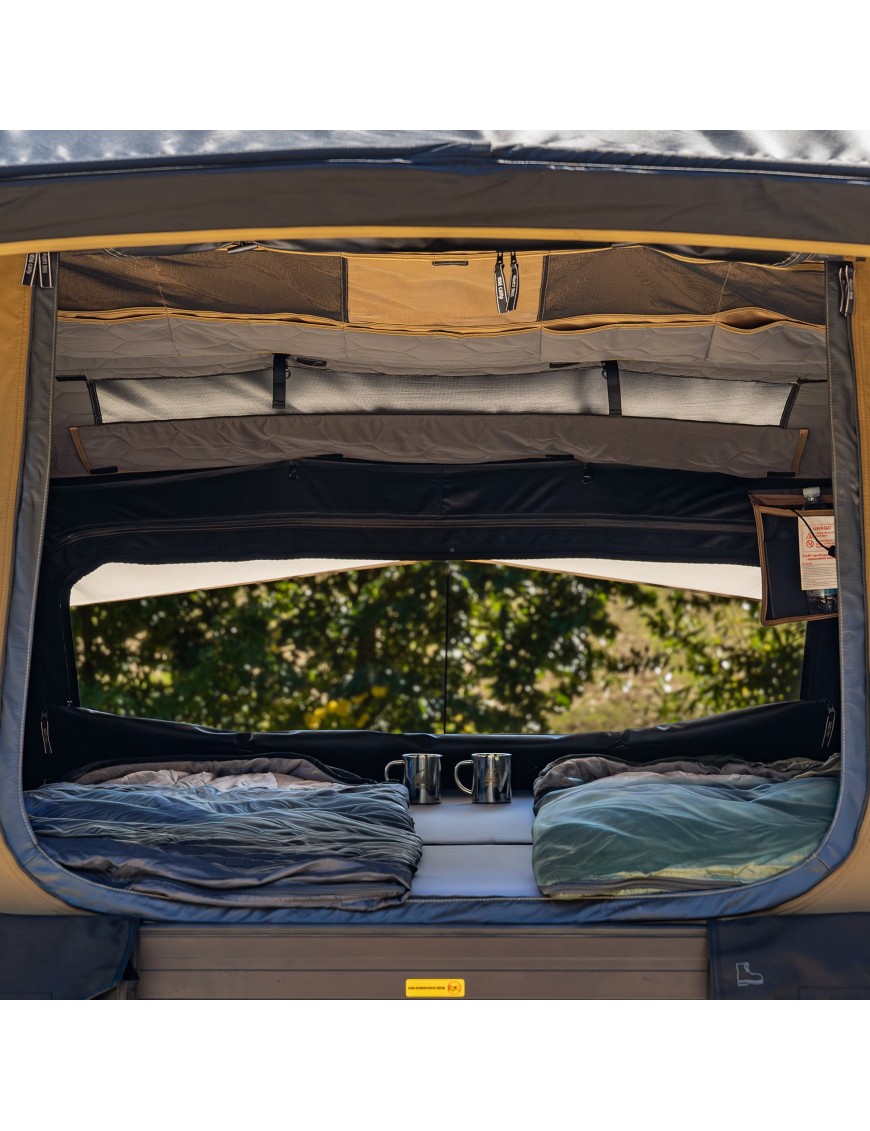
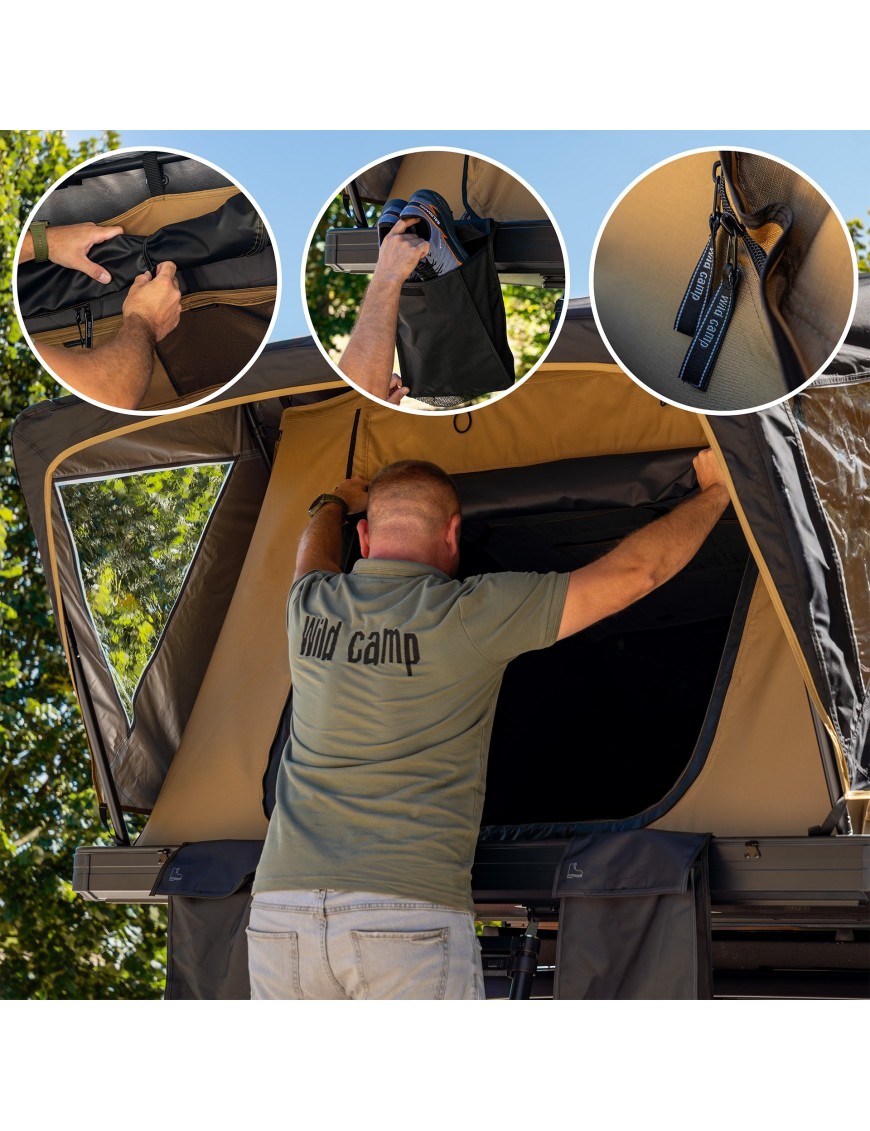
Wnętrze namiotu
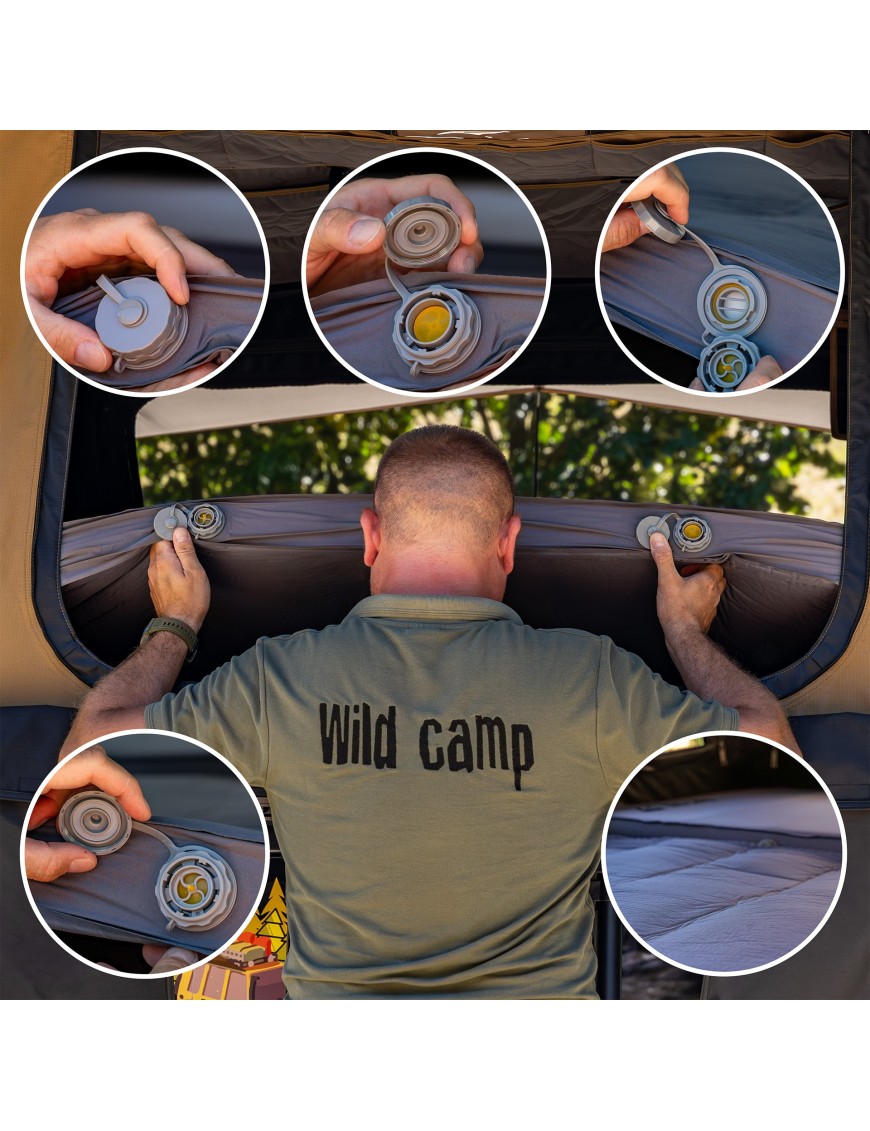
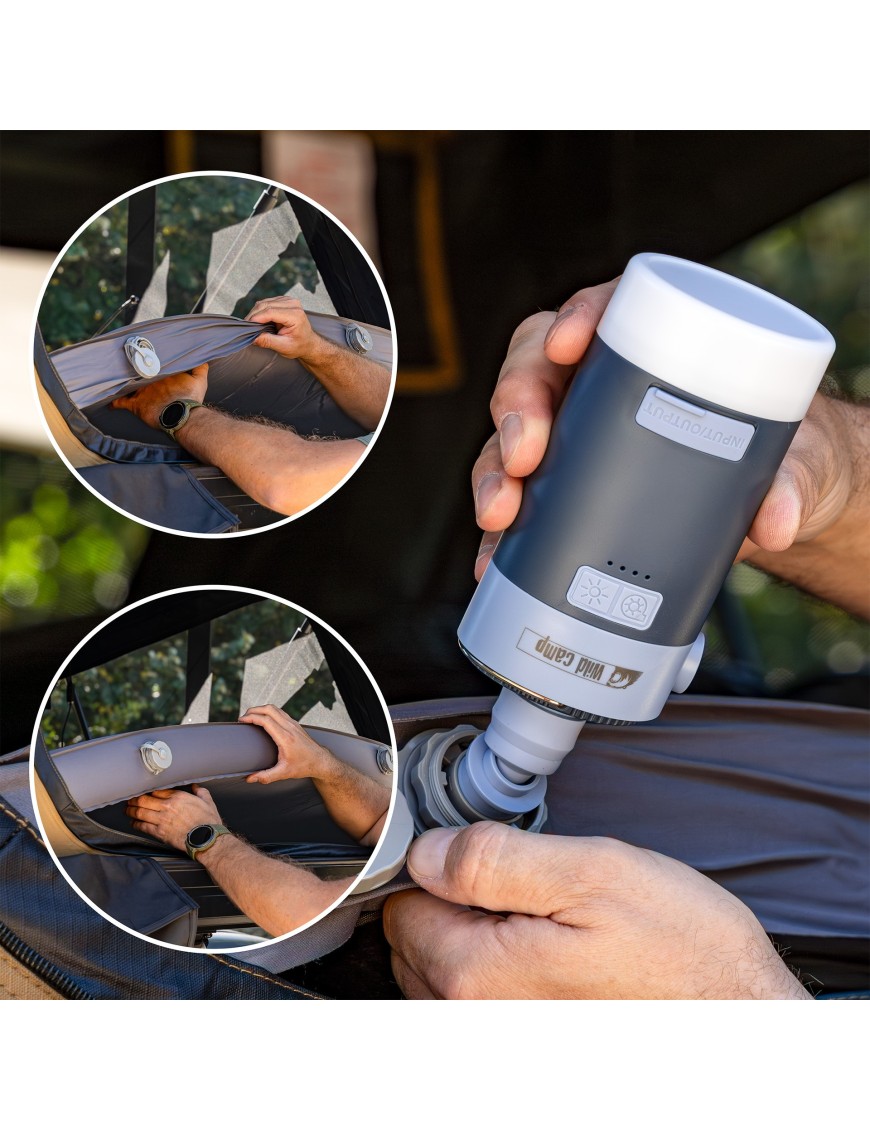
Namiot wyposażono w samopompujący materac, który dla pełnego komfortu należy jedynie uzupełnić powietrzem przy pomocy pompki dołączonej do zestawu.
Przed złożeniem namiotu wystarczy odkręcić zawory, aby powietrze mogło swobodnie ujść z materaca. Po całkowitym spuszczeniu powietrza namiot można bezpiecznie i wygodnie złożyć.
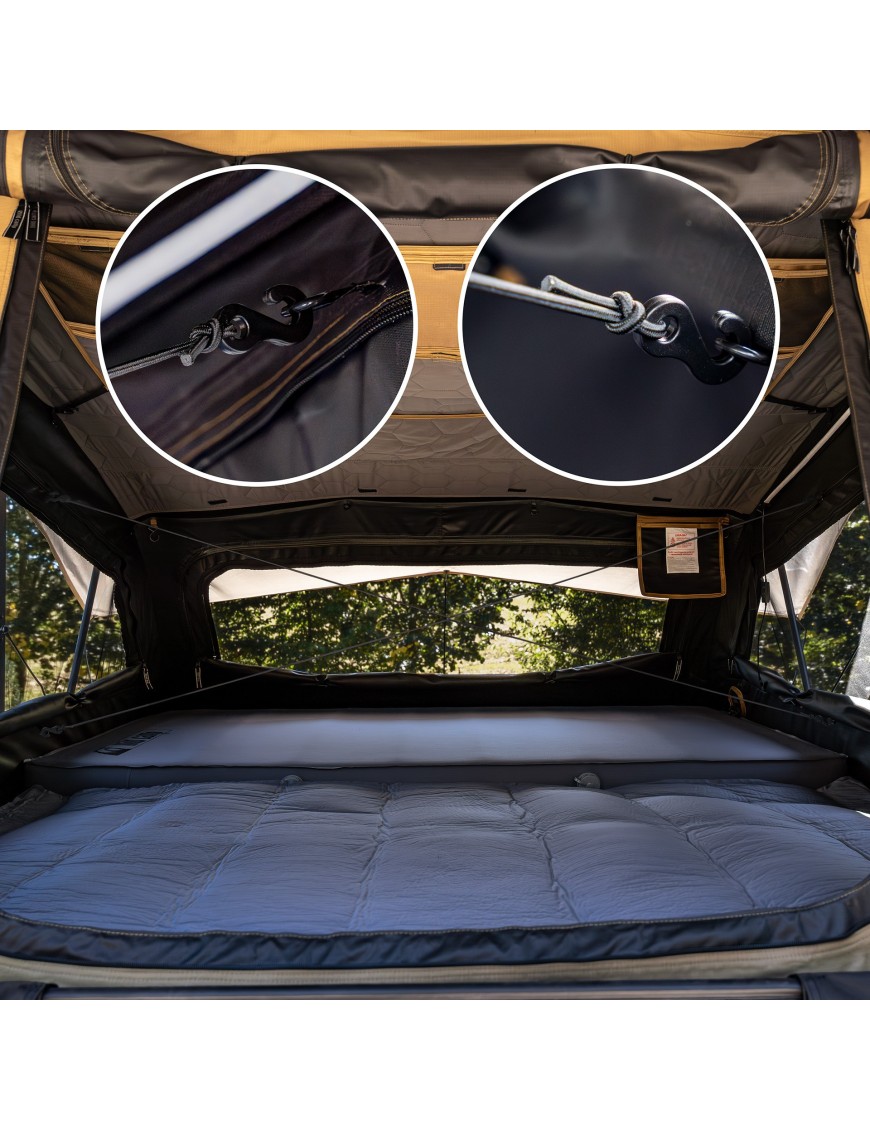
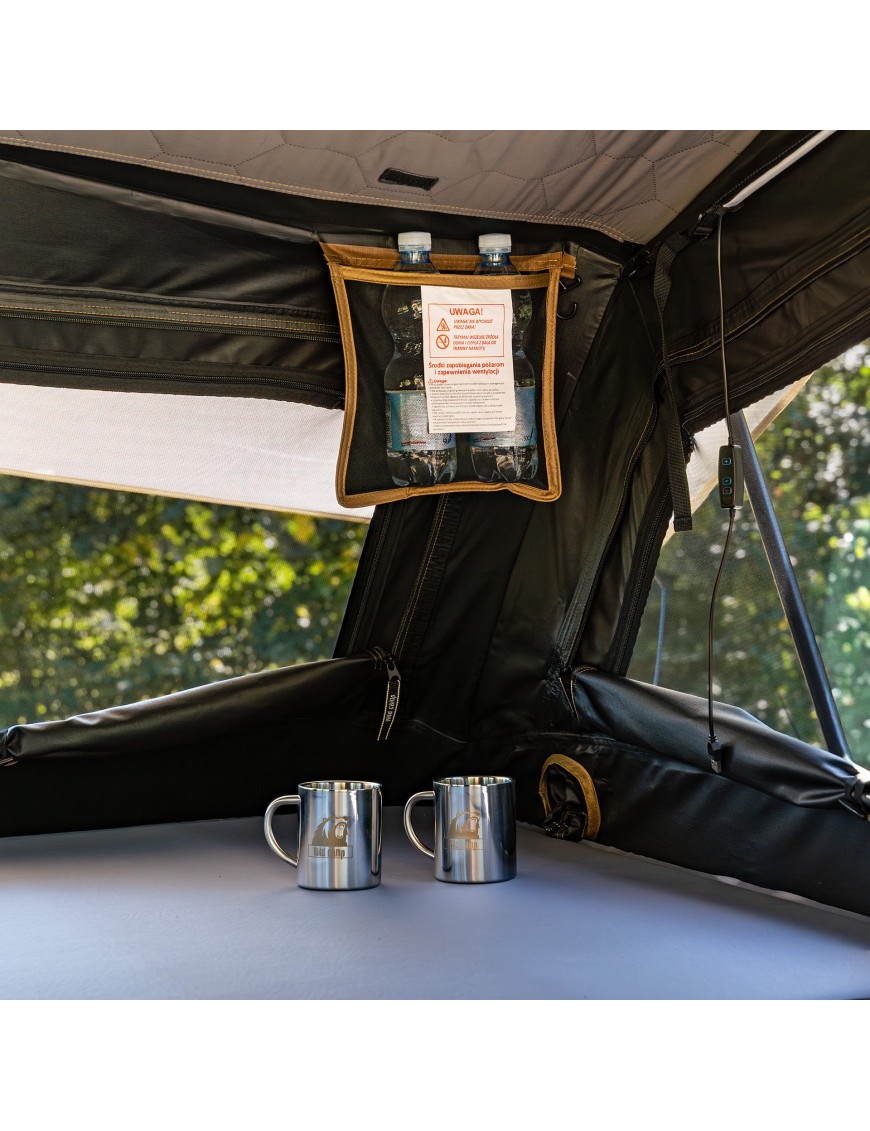
We wnętrzu namiotu znajduje się duży i przestronny organizer, który zapewnia wygodne miejsce do przechowywania najpotrzebniejszych rzeczy, takich jak latarki, mapy, dokumenty czy inne drobne akcesoria, umożliwiając łatwy dostęp i utrzymanie porządku w namiocie podczas wypraw.
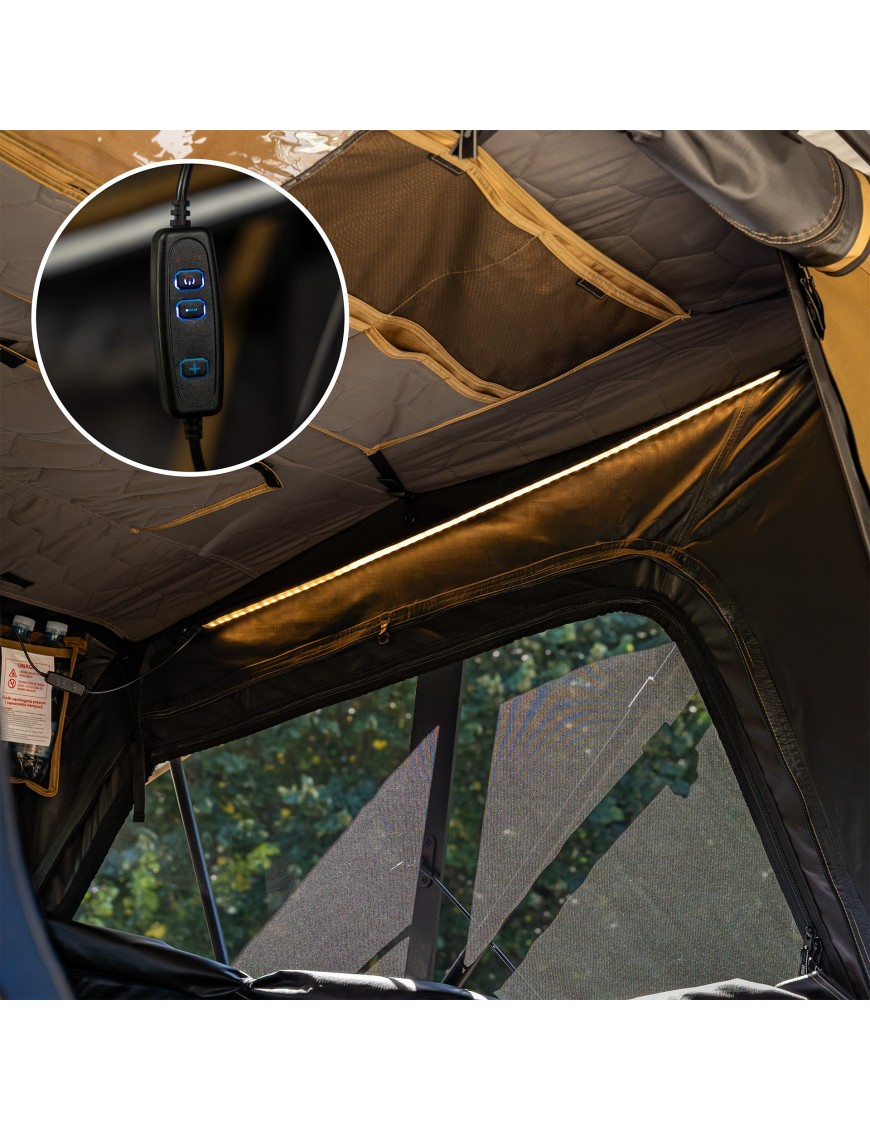
Namiot wyposażono w oświetlenie LEDowe, które zapewniaja odpowiednie oświetlenie wnętrza, zwiększając komfort użytkowania po zmroku. LED zasilany jest za pomocą power banku lub innego źródła prądu z wejściem USB 2.0, co pozwala na wygodne i elastyczne korzystanie z oświetlenia.
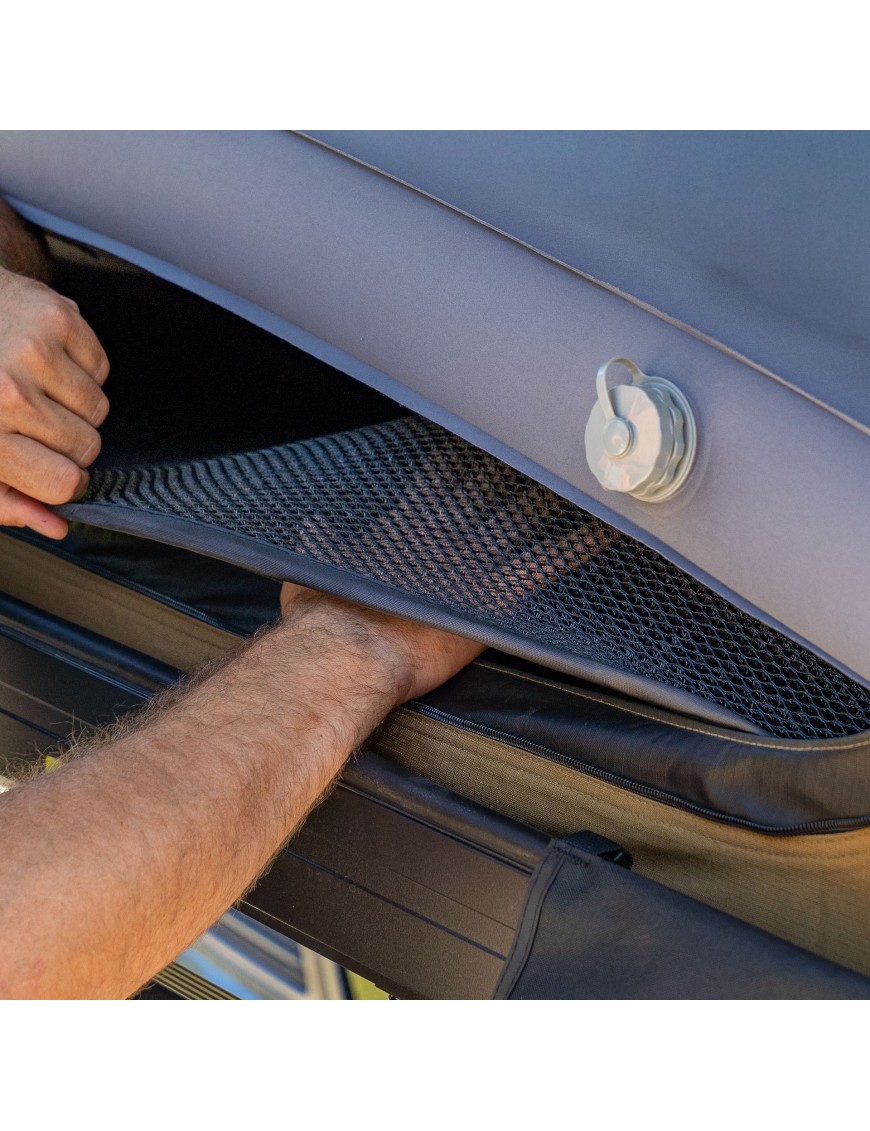
Pod materacem znajduje się mata wentylująca, która zwiększa cyrkulację powietrza. Dzięki macie materac pozostaje suchy, a użytkownik może cieszyć się lepszym przepływem powietrza.
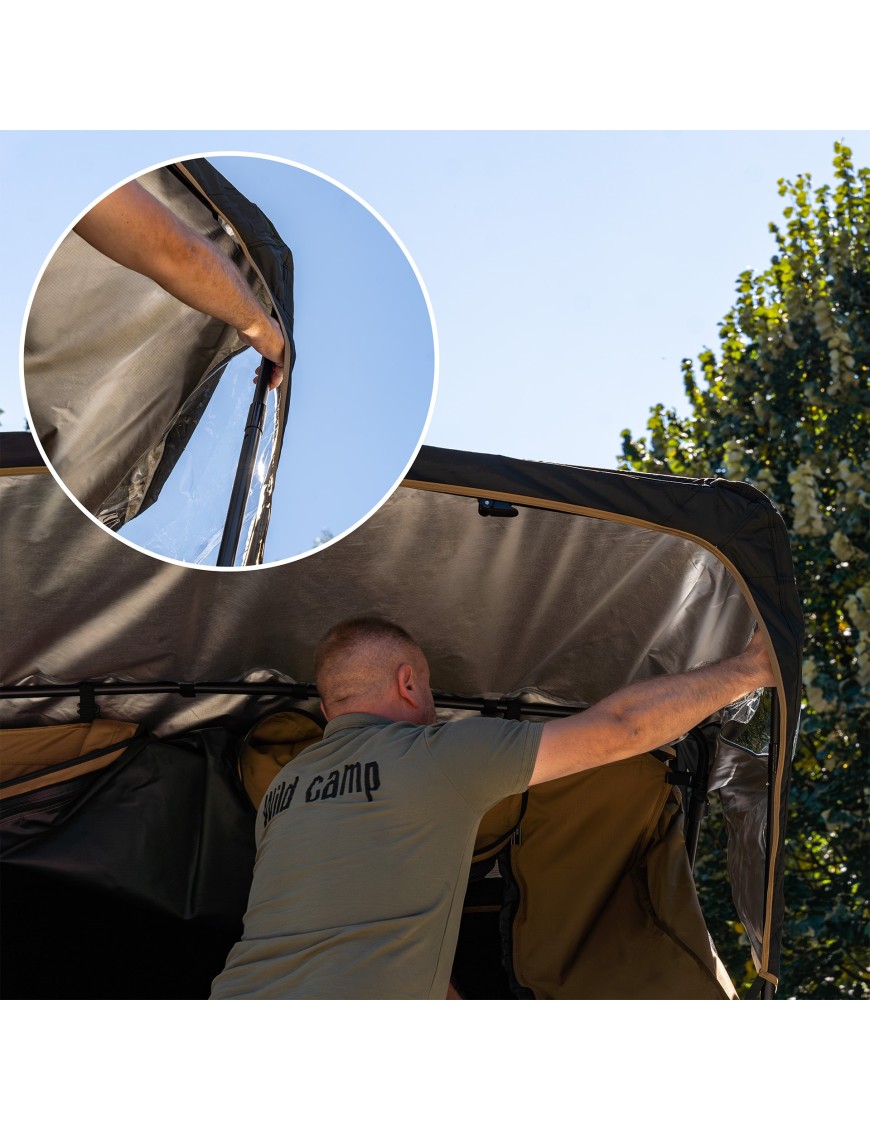
Zewnętrzny tropik skutecznie chroni przed przedostawaniem się wody do wnętrza namiotu, nawet podczas intensywnych opadów. Jednocześnie otwór w górnej części poszycia znacząco zwiększa wentylację, umożliwiając lepszy przepływ powietrza, co zapobiega powstawaniu wilgoci wewnątrz i zapewnia przyjemne warunki do wypoczynku.
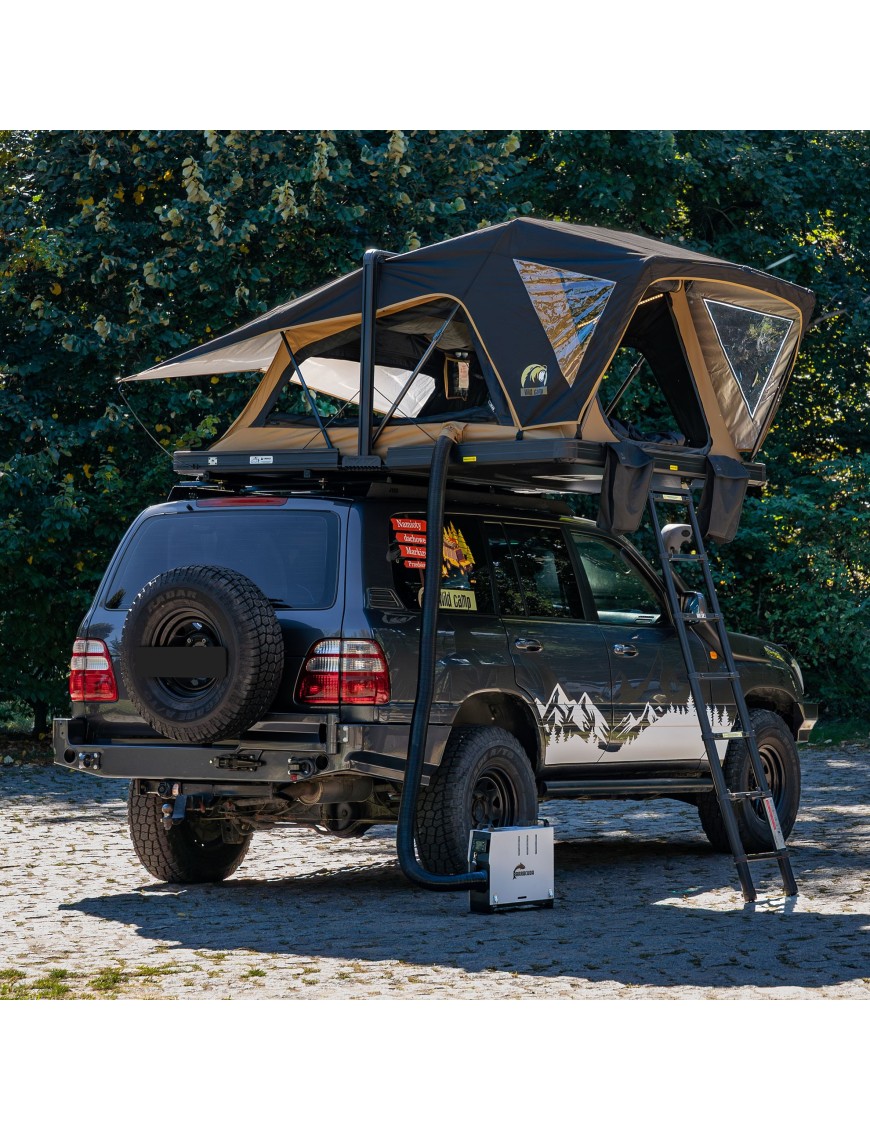
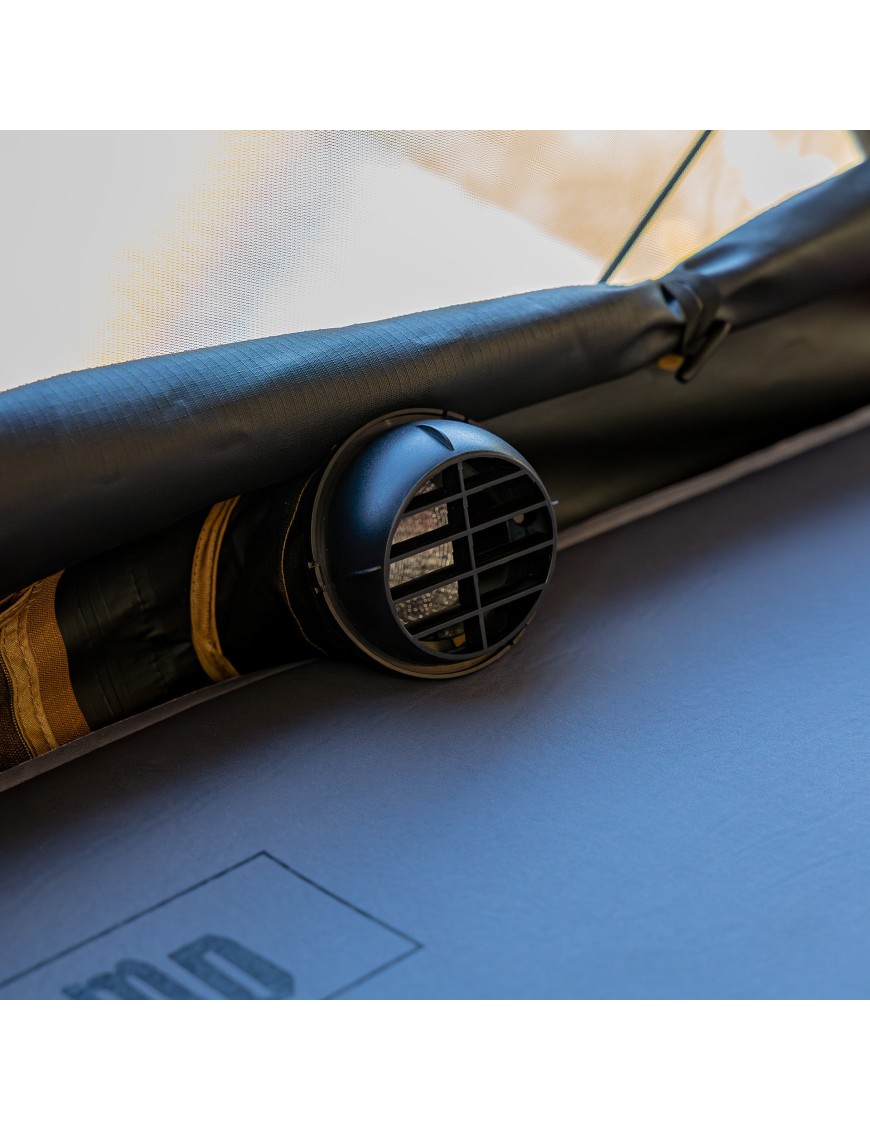
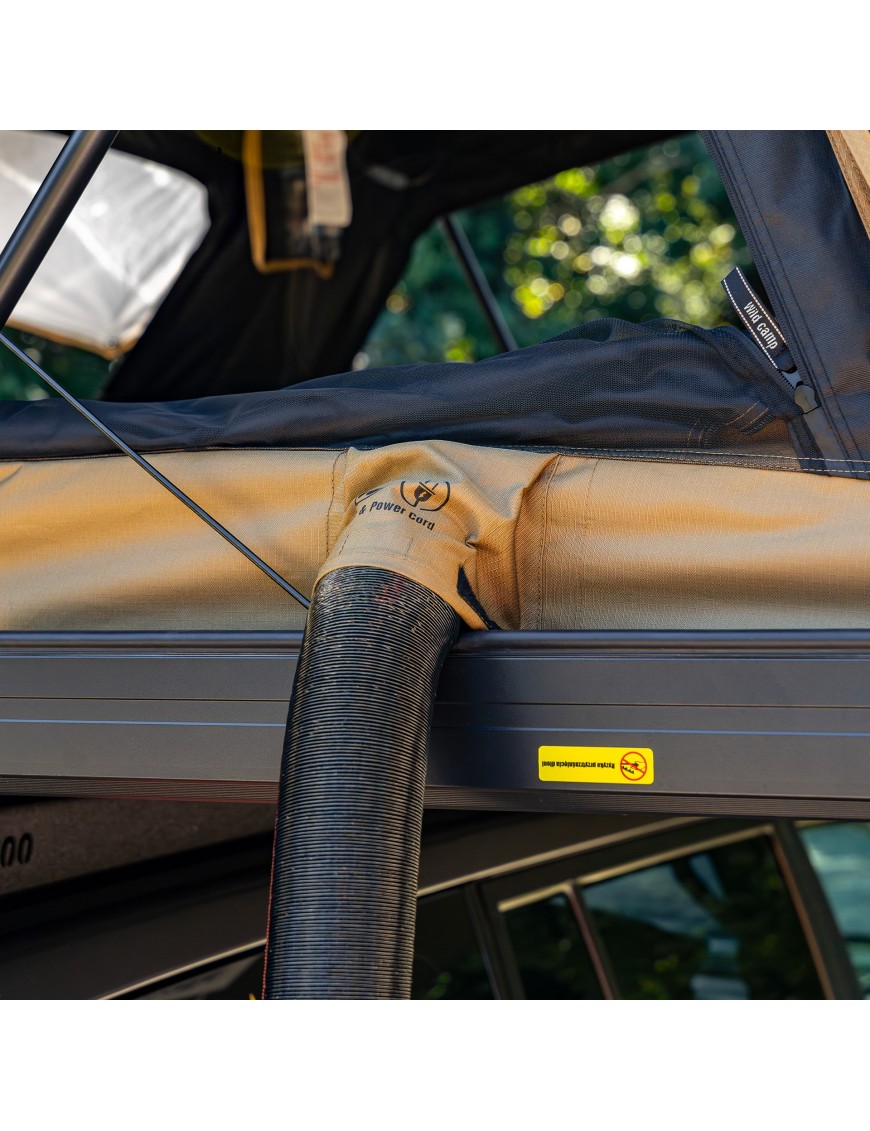
Miłośnicy komfortu termicznego docenią fakt, że namiot został wyposażony w dedykowane wejście techniczne, umożliwiające podłączenie zewnętrznego systemu ogrzewania powietrznego. Otwór ten został umiejscowiony strategicznie na ścianie korpusu namiotu, tuż obok wejścia do jego wnętrza. Dzięki temu rozwiązaniu wnętrze namiotu można w pełni ogrzać, zapewniając przyjemne warunki do odpoczynku niezależnie od temperatury otoczenia.
Pompka do materaca
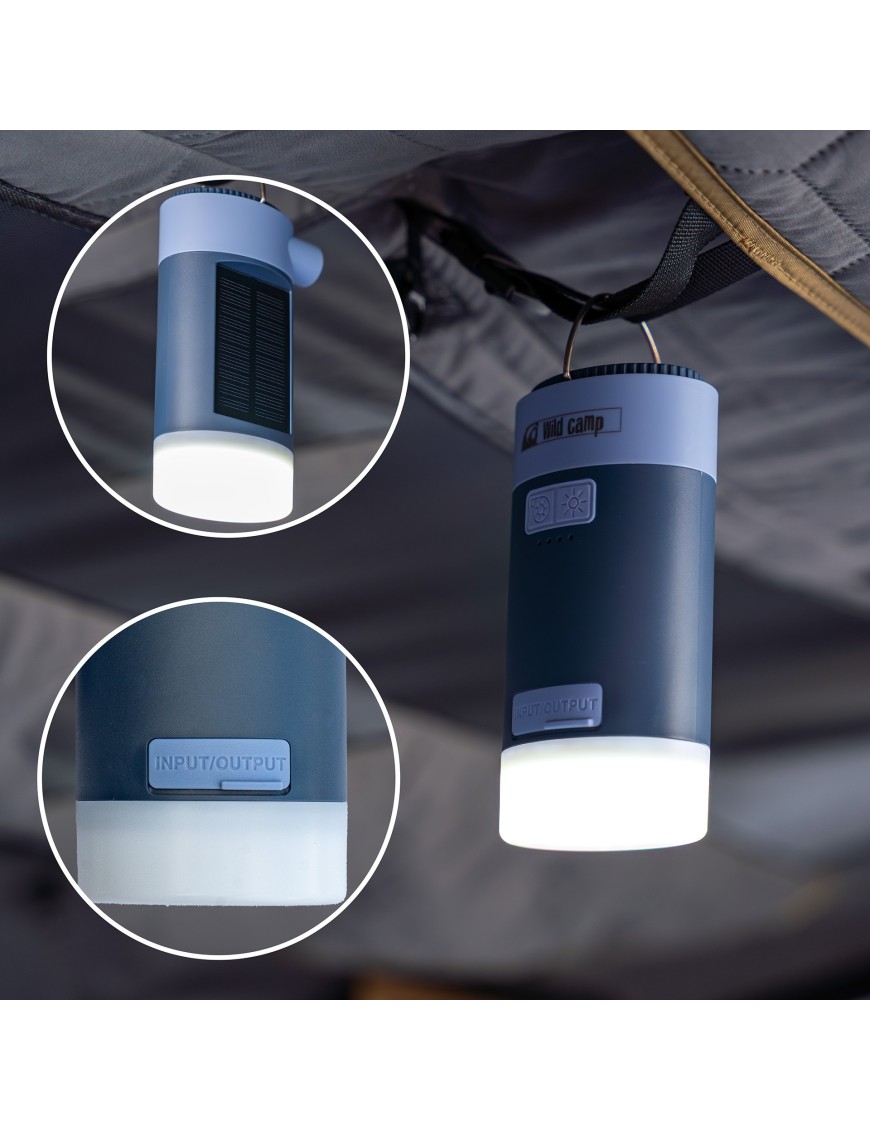
Wielofunkcyjna pompka do materaca Wild Camp to praktyczne urządzenie, które łączy w sobie kilka niezbędnych funkcji podczas podróży.
Funkcja pompowania i wysysania powietrza umożliwia szybkie przygotowanie materaca do snu, a następnie łatwe jego złożenie po odkręceniu zaworów.
Wbudowana latarka LED zapewnia oświetlenie wewnątrz namiotu lub wokół obozowiska, gwarantując komfort i bezpieczeństwo po zmroku.
Funkcja powerbanku pozwala naładować telefon, lampkę czy inne drobne urządzenia elektroniczne, co sprawia, że pompka staje się niezastąpionym towarzyszem każdej wyprawy.
Ładowanie solarne umożliwia korzystanie z energii słonecznej, dzięki czemu urządzenie jest zawsze gotowe do pracy, nawet z dala od źródeł prądu.
Praktyczny haczyk ułatwia zawieszenie pompki wewnątrz namiotu, co pozwala wykorzystać ją jako lampkę sufitową lub mieć zawsze pod ręką.
Kompaktowe wymiary i wielozadaniowość czynią tę pompkę niezastąpionym elementem ekwipunku – oszczędza miejsce, a przy tym zastępuje kilka osobnych urządzeń.
Opcjonalne wyposażenie
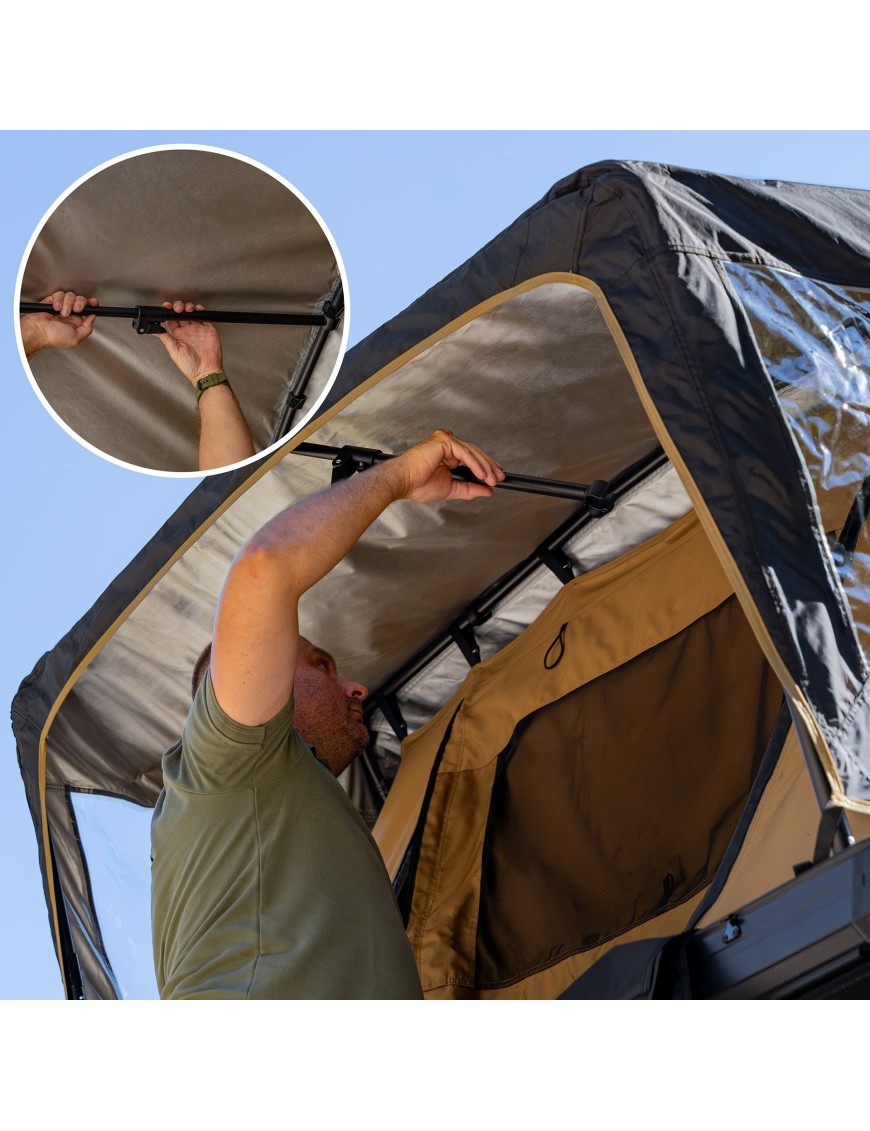
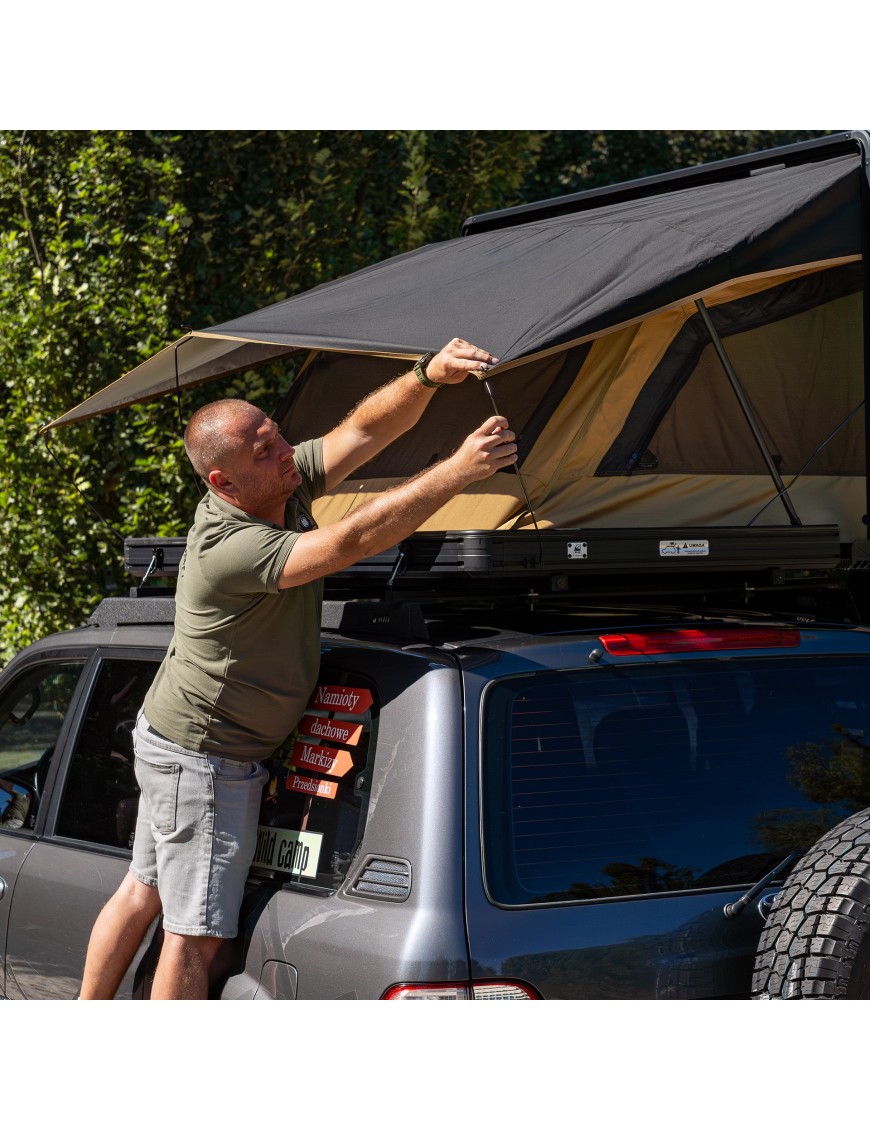
Namiot można doposażyć w praktyczny przedsionek, który znacznie zwiększaja funkcjonalność i komfort użytkowania. Przedsionek montowany jest do tropiku tworząc dodatkową przestrzeń na przechowywanie sprzętu lub ochronę przed niekorzystnymi warunkami atmosferycznymi.
Funkcjonalności namiotu dachowego Wild Camp Nevada Military:
Wnętrze namiotu oferuje praktyczne rozwiązania, takie jak:
Zalety namiotu dachowego Wild Camp Nevada 180 Military:
Szczegóły produktu
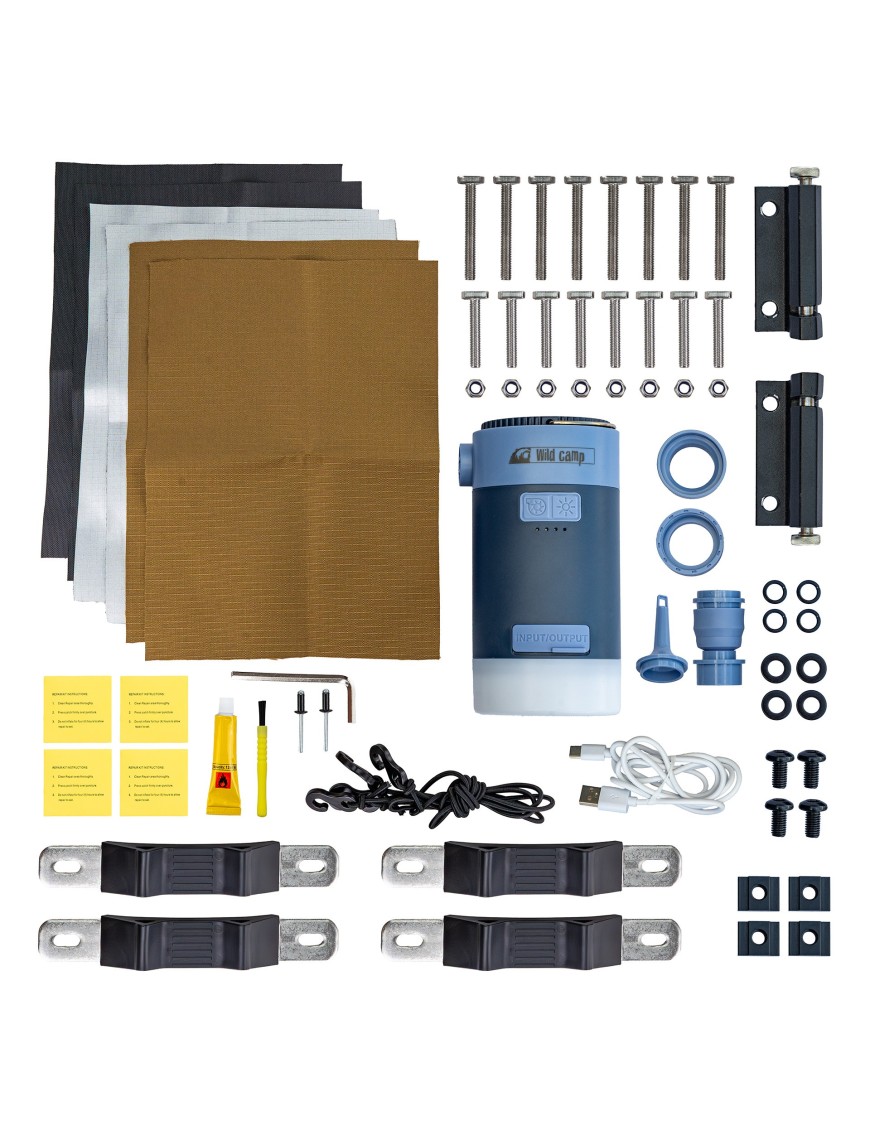
Zestaw składa się z:
Zwalniamy dwa zatrzaski w pokrywie namiotu - opcjonalnie odpinamy kłódki
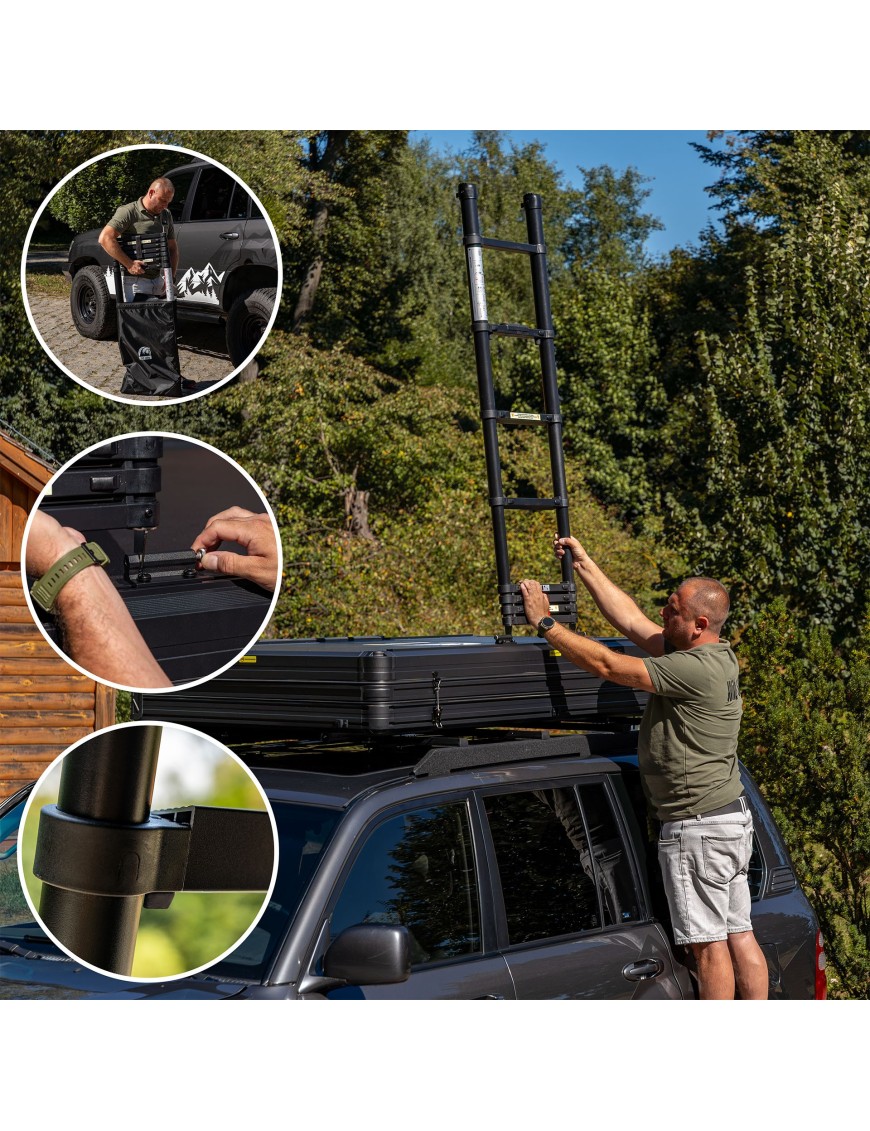
Rozsuwamy drabinkę - do całkowitego jej rozłożenia
Przy pomocy drabinki wyciągamy z wnętrza namiotu drugą część podłogi namiotu
Ustawiamy pożądaną wysokość drabinki - regulując do pożądanej wysokości
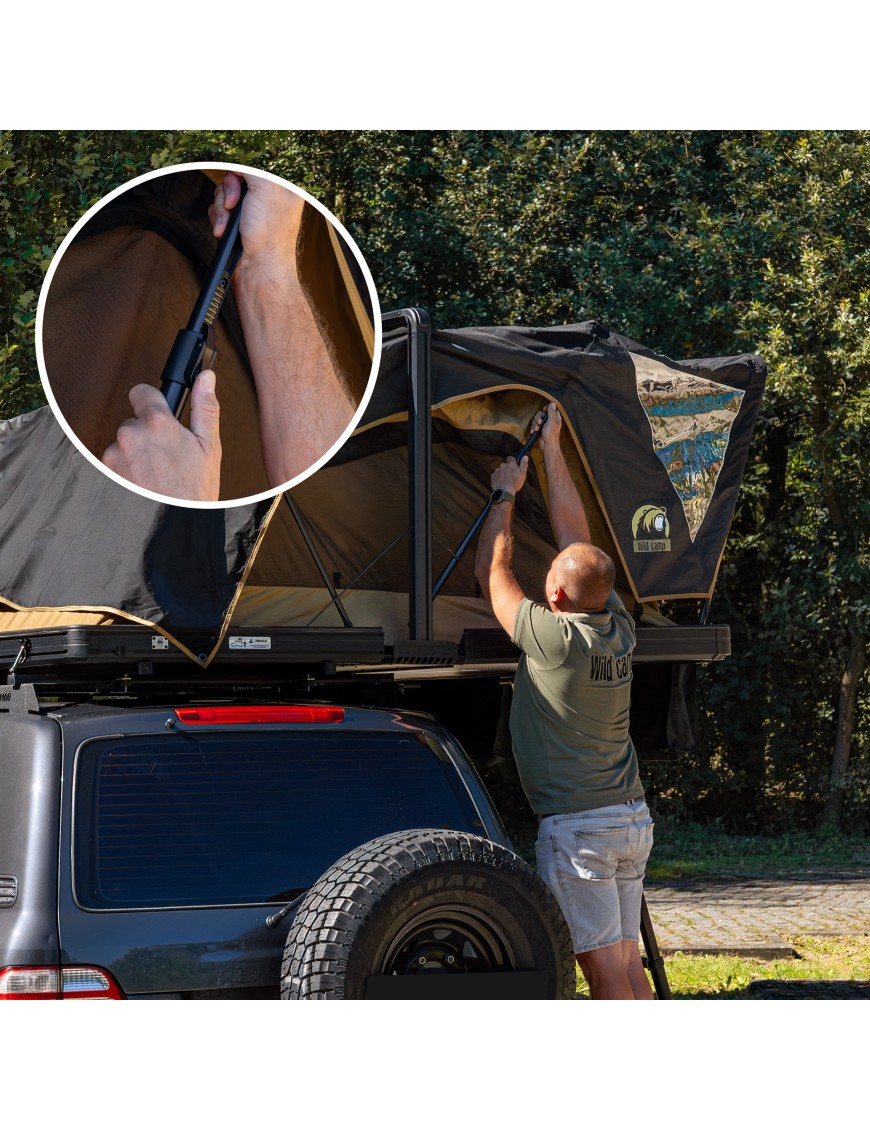
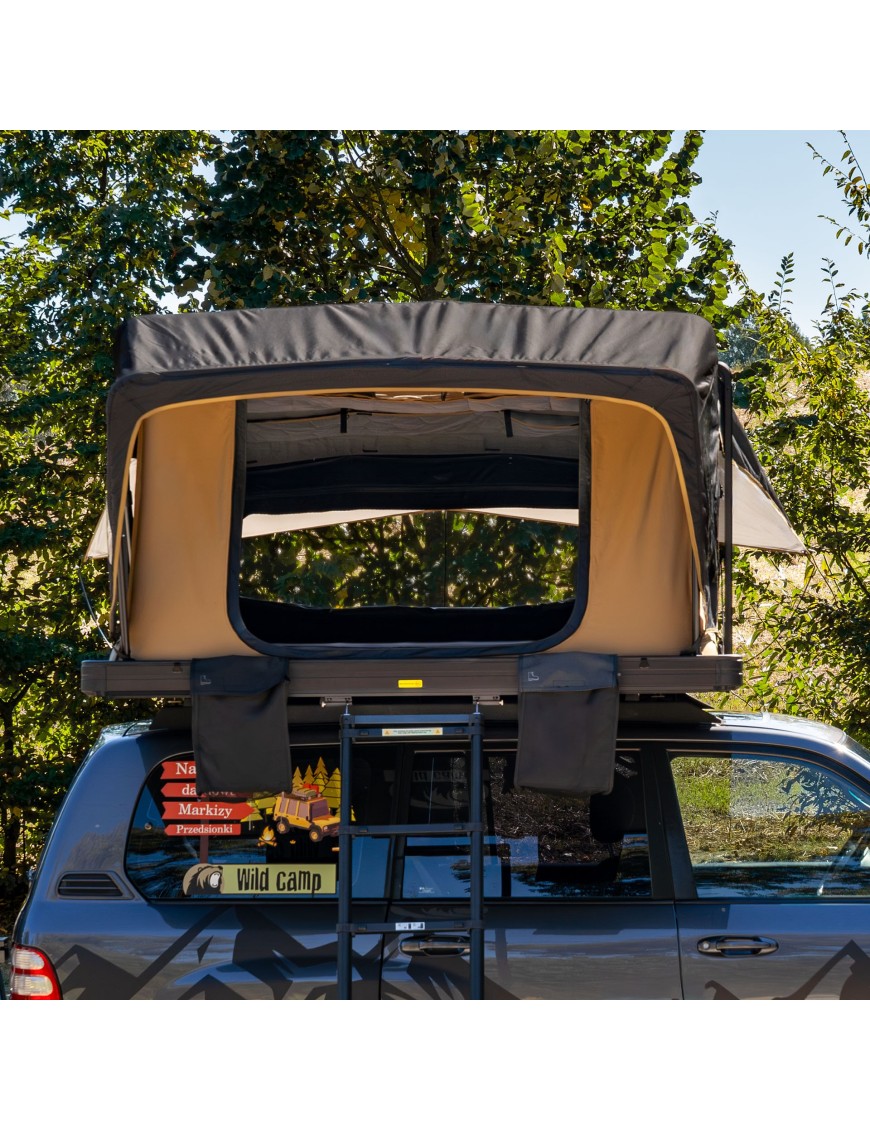
Namiot rozłożony
Gwarancja 24 miesięcy producenta! - Namiotów Dachowych WildCamp

Yes – in the vast majority of cases, as long as your vehicle can accommodate two crossbars or a roof rack/platform. The most common setups include:
Crossbars mounted on roof rails (e.g., Thule, Yakima systems, etc.).
Flat roof platform (rack).
Classic roof rack with a frame – if the rack is wider than the tent base, it’s worth adding an extra crossbar in line with the top of the frame to prevent the tent base from “sagging” in the middle and to allow it to open freely.
It’s best to have a few centimeters of clearance between the crossbar/platform and the roof surface – enough to comfortably fit your hand and a wrench when tightening the mounting brackets.
The make and body type of the vehicle are less important than the ability to safely position two solid support points. We install roof tents on city cars, SUVs, off-road vehicles, vans, and even camper vans.
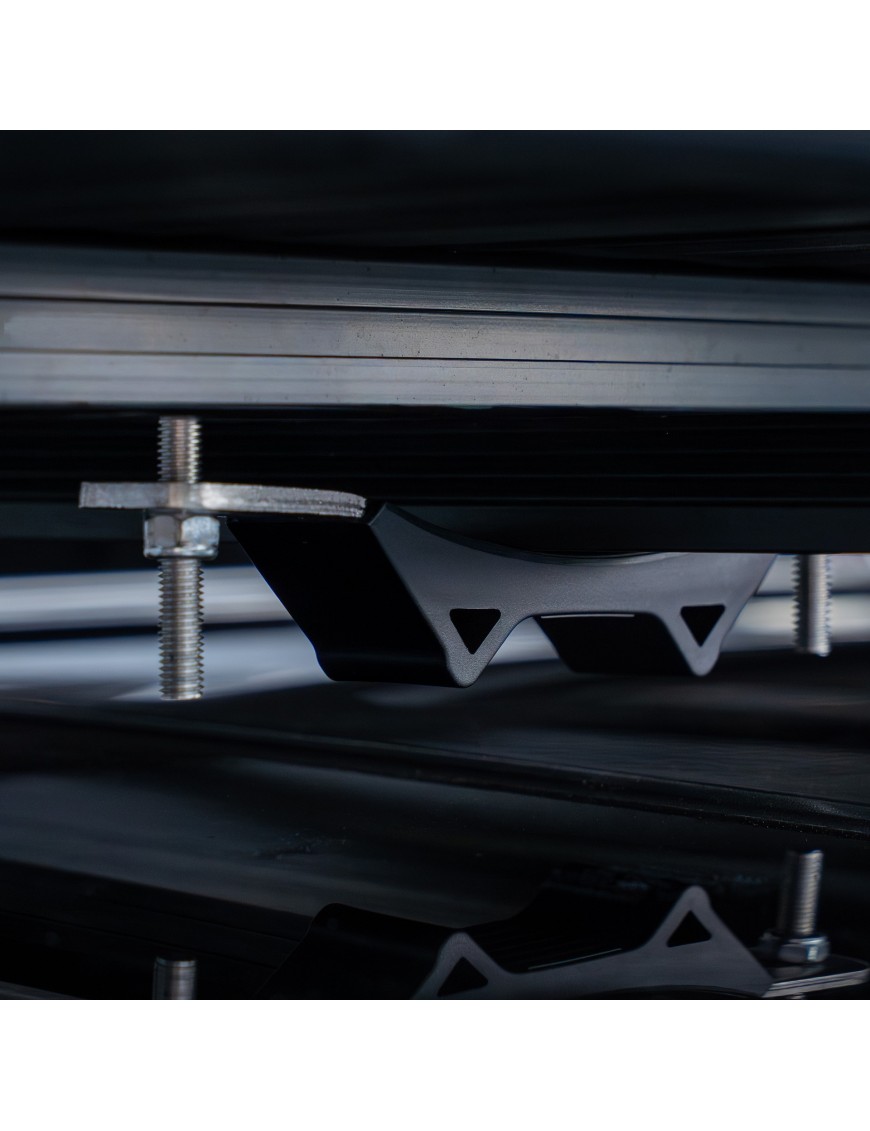
The tent is installed using four clamps that secure the rails in the tent’s base to the roof rack crossbars. The maximum crossbar width is usually around 78 mm (check the model specifications to be sure). Two crossbars and four mounting points are sufficient for stable use.
In some cases, you can purchase alternative mounting systems designed for specific roof rack models — for example, Rhino Rack, Rival, or Front Runner may offer their own dedicated solutions worth considering.
The minimum spacing is approximately half the length of the tent’s base:
140 cm → min. 70 cm
160 cm → min. 80 cm
190 cm → min. 95 cm
The floor is reinforced with rails, so deviations are possible if necessary, but you should always follow the manufacturer’s instructions.
Short – less covered entrance, ladder outside the annex.
Long – more sheltered entrance, ladder inside the annex.
The sleeping area is the same in both versions.
Measure the height from the ground to the top surface of the crossbar/roof rack:
Up to 2.1 m → 2.3 m ladder
Over 2.1 m → 2.6 m ladder
Provide your vehicle model, the height to the mounting point, and the type of crossbars — we will select the right rooftop tent and accessories for you, and offer installation at Szekla4x4.
Contact details:
info@szekla4x4.pl
+48 534 600 534
By installing an additional layer of fabric as an inner wall (available from manufacturers), you can increase the perceived temperature inside by up to 10 °C.
A thermal blanket, the kind you can get at a pharmacy for about 6 PLN, will definitely help you warm up in an emergency.
An electric blanket or electric mat powered via USB or a car cigarette lighter has low power consumption while providing really nice warmth.
Parking heaters | Webasto – both the original and alternatives from other brands like Hcalory or Barracuda – run on diesel and electricity; you can run a warm air duct directly from them into the tent.
A warm sleeping bag – choose one that meets the thermal insulation parameters specified by the European standard EN 13537.
| Question | Hard Shell | Soft Cover |
|---|---|---|
| Setup and packing time? | Very quick – often just seconds thanks to gas struts. | Requires removing the cover and unfolding the frame – several minutes. |
| Durability and resistance? | Strong shell (plastic/aluminum/fiberglass); better protection from elements. | Fabric is more prone to wear and weather damage. |
| Aerodynamics and fuel consumption? | Lower profile, less wind resistance. | Higher profile, more wind drag, possibly higher fuel use. |
| Price and weight? | Usually more expensive and heavier; requires a solid roof rack. | Cheaper and lighter; easier to mount and remove. |
| Interior space? | Often more compact inside. | Usually more spacious and comfortable for multiple people. |
We will be happy to install any rooftop tent purchased from us in our workshop.
It’s important to first confirm the installation method and possibilities – please contact us in advance.
Email:** info@szekla4x4.pl
Phone: +48 534 600 534 (press 3, or press 1 if line is busy)
Q: Why does condensation form inside a rooftop tent?
A: When warm, moist air inside the tent meets the cold tent walls, condensation occurs. The greater the temperature difference, the more condensation will form.
Q: What external factors increase condensation?
A: High humidity in the air, such as during rain or fog, increases the amount of moisture that can accumulate and then condense inside the tent.
Q: How does poor ventilation contribute to condensation?
A: Without proper airflow, moisture gets trapped inside, causing water droplets to appear on the inner surfaces. Good ventilation reduces this effect.
Q: How can I reduce condensation inside the tent?
Use an anti-condensation mat under the mattress to act as a thermal barrier and absorb moisture.
Ensure proper ventilation by keeping vents slightly open, even in cold weather.
In humid conditions, consider using a portable dehumidifier.
Q: What is the dynamic and static roof load capacity?
A:
Dynamic load capacity – the maximum weight the roof can carry while driving.
Static load capacity – the weight the roof can support when the vehicle is stationary, often much higher thanks to the support from the ladder or the tent’s frame.
Q: Where can I check the roof load capacity?
A: You can find the values in the vehicle’s manual. If not listed, ask the manufacturer or dealer.
Q: What should I consider when installing a rooftop tent?
A: The total weight (tent + roof rack + gear inside) must not exceed the dynamic roof load capacity and the load capacity of the crossbars. This means everything on the roof while driving.
Concerns? We often hear: “If the dynamic roof load is only 100 kg, how can it support 4 people?” As explained above, the dynamic capacity refers only to the load while driving. When stationary, the roof can handle much more weight.
When the camping season comes to an end, it’s worth taking the time to properly prepare your rooftop tent for storage to extend its lifespan. The most important step is to thoroughly dry and air it out – this removes any moisture from the fabric and frame, helping to prevent mold, unpleasant odors, and material degradation.
How to store it?
The tent can be stored horizontally, vertically, or even suspended from the ceiling (e.g., in a garage). The exact orientation is not critical – what matters is that the tent does not come into contact with damp or bare concrete, which can promote moisture build-up and negatively affect its condition.
Storage conditions
Choose a space with a positive, stable temperature and low humidity. This will keep your rooftop tent in great shape and ready for the next season without additional maintenance.
A rooftop tent leaves the factory already well-protected – the fabric is treated with special coatings that provide effective resistance against water, wind, and other weather conditions. This means that a new tent does not require any additional waterproofing before its first use.
Over time, however, with regular and intensive use, the hydrophobic coating may gradually lose its effectiveness. It is therefore recommended to periodically check the condition of the fabric and, if you notice a decrease in water resistance, reapply a waterproofing treatment. Doing so will maintain optimal protection against moisture and significantly extend the lifespan of your tent.
Underfloor Storage – The Missisipi II includes a mesh organizer beneath the floor, perfect for keeping small gear neatly stowed. The Hudson does not feature this storage option.
Interior Lighting – In the Missisipi II, you can adjust the brightness of the built-in light to suit your needs. The Hudson’s lighting is basic, with only an on/off function.
Extra Ventilation – At the tent’s peak, the Missisipi II has two additional vents on each side, improving airflow throughout the interior. The Hudson lacks these extra vents.
Side Windows – The side openings in the Missisipi II are larger, providing more natural light and better ventilation compared to the Hudson.
Tent Shape – The Missisipi II features a rounded profile, helping reduce wind resistance and allowing rain to run off more easily. The Hudson maintains a more traditional, straight-lined design.
Window Above the Ladder – The awning over the entrance on the Missisipi II includes an extra window, allowing more daylight inside. This is not present on the Hudson.
Awning Support Mounting – On the Missisipi II, the awning support attaches to the upper part of the tent using Velcro straps, making it easier to prepare for transport. The Hudson uses a slot-in method between the tent’s fabric layers.
Protective Cover – The Missisipi II comes with a cover featuring compression straps that can be rolled and tucked under the floor once the tent is set up. The Hudson does not have this functionality.
Underfloor Gear Storage – The Kolorado II includes a handy mesh organizer located beneath the floor, perfect for keeping small essentials organized and within reach. The Ohio does not feature this storage option.
Lighting System – In the Kolorado II, the interior lighting comes with adjustable brightness, allowing you to set the perfect level for any situation. The Ohio offers a simpler on/off light without dimming capability.
Additional Ventilation – The Kolorado II is equipped with two extra vents on each side of the tent’s peak, improving airflow and reducing condensation. The Ohio does not have these extra vents.
Side Windows – The Kolorado II has noticeably larger side windows, letting in more daylight and boosting ventilation compared to the Ohio.
Tent Shape – With its rounded, aerodynamic profile, the Kolorado II handles wind better and sheds water more effectively. The Ohio features a straighter, boxier shape.
Protective Cover – The Kolorado II’s cover includes compression straps and can be rolled up and stowed under the floor once the tent is set up. This feature is not available on the Ohio.
Day & Night is an advanced multi-layer technical fabric designed to maximize comfort for rooftop tent users. Its specialized construction blocks up to 100% of sunlight, helping to keep the tent’s interior significantly cooler during the day.
Beyond heat control, this material also ensures complete privacy — even under strong sunlight — allowing you to enjoy peace and seclusion whenever you need it.
Perfect for hot summer days and bright early mornings, Day & Night fabric helps you sleep longer without being disturbed by light, creating an ideal environment for rest and relaxation.
How to Clean and Maintain Your Roof Top Tent
For regular cleaning, use a soft sponge or cloth together with lukewarm water and a mild cleaning solution — a gentle dishwashing liquid works well.
Avoid using a pressure washer, as the strong water jet can damage the fabric, weaken the seams, or strip away the protective waterproof coating. Always clean the tent carefully and without excessive scrubbing to preserve its durability and protective properties.
If you notice mold on the tent, we recommend using a dedicated mold remover, such as:
Anti-Mold and Mildew Cleaner Yachticon 500ml
Yes — every tent comes equipped with a foam mattress as standard, designed to provide comfortable sleep even on extended trips. Made from high-quality medium-firm foam, it contours to the body while offering reliable support throughout the night.
A key convenience is that the mattress can remain inside the tent when it’s folded down. This saves time during setup and takedown, while also freeing up space in your gear storage. All mattresses feature removable, washable covers, making it easy to keep them clean and fresh for every adventure.
To improve security and reduce the risk of theft, it’s worth installing anti-theft nuts or similar locking hardware. This is especially useful when parking in public areas or open spaces where the tent may be left unattended for extended periods.
If you’re planning a long break from using the tent, or it’s not currently needed, the safest option is to remove it from the vehicle and store it in a secure, enclosed location. This approach not only minimizes the chance of theft but also protects the tent from harsh weather and unnecessary wear.
The best security method will depend on your location, how often you use the tent, and your personal requirements.
Yes — a roof top tent can remain installed on your vehicle permanently, especially during the warmer months when it’s used frequently.
However, if you’re expecting a long break in use — particularly over the winter — it’s best to remove the tent and store it in a dry, well-ventilated location.
This approach helps prevent damage caused by harsh weather conditions such as snow, ice, excess moisture, or road salt. It also reduces the load on your vehicle’s roof, which can have a positive impact on fuel efficiency and overall vehicle condition.
For safe travel, it’s recommended not to exceed 120 km/h (about 75 mph) when driving with a roof top tent installed.
Higher speeds can affect the vehicle’s stability, increase fuel consumption and noise levels, and put extra strain on the tent’s structure due to strong air resistance.
Maintaining a sensible speed is one of the key factors for both comfort and safety, especially when carrying additional load on your vehicle’s roof.
Yes — a roof top tent can be mounted on a pickup truck, provided you use the correct crossbars or a dedicated platform designed to fit the vehicle’s structure and load capacity.
However, there is one very important rule: the tent must never be installed in a way that connects both the cab and the cargo bed. In pickup trucks, these two sections of the body move independently, especially when driving over uneven terrain. Rigidly linking them with a tent can create excessive structural stress, potentially damaging the tent, the mounting bars, the attachment points, or even parts of the vehicle’s bodywork.
Namiot dachowy Wild Camp Nevada to solidny i funkcjonalnym namiot, który zapewni komfort podczas podróży.
Kolor namiotu military