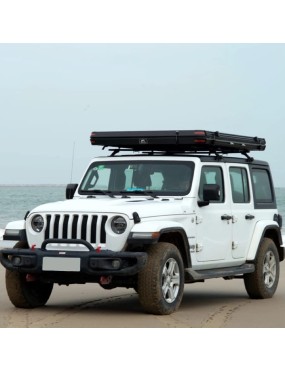
How Much Weight Can Your Roof Actually Take?
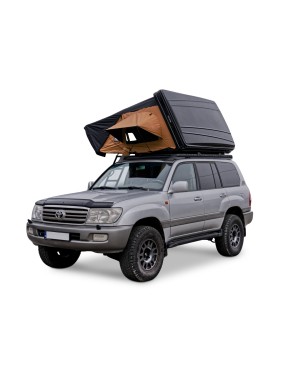
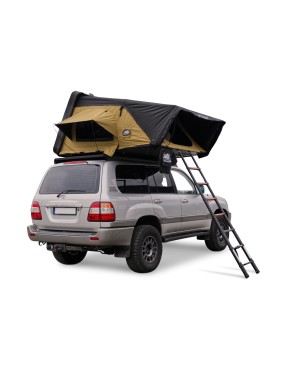
The manufacturer says "70 kg dynamic," yet you're driving around with a roof rack, a rooftop tent and a full load of gear — well over 150 kg. Nothing happens. So where does that number in the paperwork even come from?
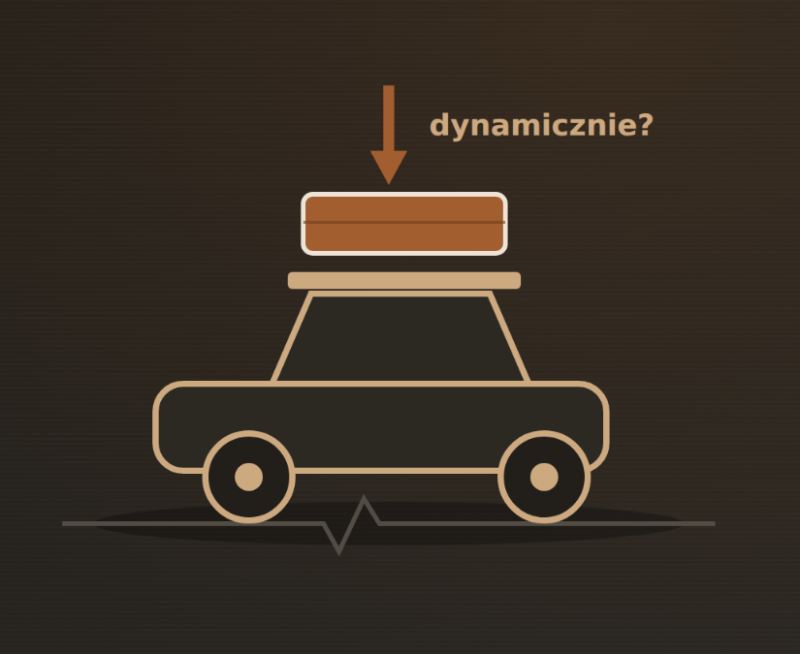
How Much Weight Can Your Roof Actually Take?
The manufacturer says "70 kg dynamic," yet you're driving around with a roof rack, a rooftop tent and a full load of gear — well over 150 kg. Nothing happens. So where does that number in the paperwork even come from?
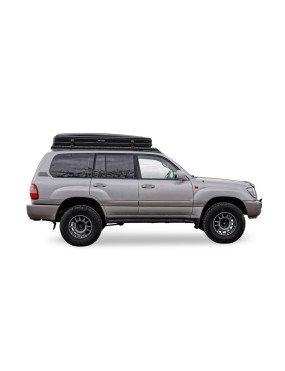
We get this question all the time — at the stand, in Facebook groups, sometimes mid-installation when a customer glances at their registration document and asks, "wait, is this actually safe?" And honestly, I get the doubt, because the numbers in the owner's manual really do look like someone pulled them out of thin air. 70 kg dynamic, and the roof is carrying a rack, a rooftop tent, an awning, a traction board, a jerry can and a storage box — and you've been driving like that for two seasons without a single problem.
So maybe manufacturers are just being overly cautious? Not quite. The problem is that this number answers a completely different question than most of us assume. Let's break it down piece by piece — because once you understand it, you'll stop guessing and start calculating.
01Two numbers, two different questions
Vehicle and roof rack documentation usually lists two values, and they differ by several multiples for good reason. Static load capacity answers one question: how much can the roof carry when the car is parked? That matters when you're sleeping in a rooftop tent at camp — the roof simply has to hold the weight of the tent, the mattress and the two of you, without any lasting deformation. Typically that's 200–400 kg, sometimes more.
Dynamic load capacity answers an entirely different question: how much can the roof safely carry while the car is moving? This is the figure that actually applies to your rack, your tent and all your gear out on the road — usually 50–100 kg for passenger cars, a bit more for some off-roaders.
PARKEDfull weight, at rest static capacity: ~300 kg POTHOLE AT 50 MPHmomentarily 3–4x heavier dynamic capacity: ~70 kg
Roof rack manufacturers like Thule actually simplify this into a rule of thumb: static capacity is roughly three times the dynamic figure. And — this is the important part — the real capacity of the whole setup isn't decided by either number alone, but by the weakest link in the chain: the car's roof, the roof rail, the rack's foot, or the crossbar itself. If the rack maker rates 100 kg and the carmaker rates 70 kg, the lower number wins. Always.
02Where do these numbers even come from
This isn't an eyeballed estimate. The European reference point is ISO 11154 "Road vehicles — Roof load carriers," which sets safety requirements for roof racks that account for load mass, center-of-gravity position, aerodynamic drag and other factors affecting driving safety. Manufacturers run tests in two stages.
The static test is easy to picture — a defined vertical force is applied to the roof or the mounting points, and engineers check whether the sheet metal, the rail or the bolts deform permanently. The dynamic test is more interesting: a loaded roof rack is driven over a standardized, uneven surface — sometimes an actual test track, sometimes a vibration rig simulating thousands of kilometers of bad roads — and engineers then inspect the mounts for cracking, loosening and material fatigue.
And here's the crux of it: that test doesn't check calm driving on smooth asphalt at all. It checks peak events — a hard-hit pothole, sudden braking, a sharp swerve. In that instant, the weight on the roof stops being what the scale says and starts acting under acceleration. A 20 kg load hit with a jolt around 3g "weighs" roughly 60 kg on the mounts for that moment. That's exactly what dynamic capacity is engineered for — not a lazy Sunday coffee run.
03So why does 200 kg work fine when the paperwork says 70?
Now we get to the real question. And the answer is made up of several overlapping reasons, not one simple explanation.
First — the safety margin has to cover the worst possible case, not an average day. The manufacturer guarantees safety for every single example of that model: including the one with slightly corroded mounts after twelve years, worn suspension, freezing temperatures that make plastics brittle, a foot that isn't fully torqued down, and a rutted gravel road. Day to day, you're usually driving in much gentler conditions than that — and that's the first reason the margin turns out bigger than it looks.
Second — risk shows up in a single event, not in routine driving. If you never hit a genuinely deep pothole at real speed, and never brake hard with a fully loaded roof, you simply never generate the forces that standard is protecting against. That doesn't mean the margin doesn't exist — it means you haven't yet hit the situation that actually tests it.
Third — material fatigue builds up quietly. Regularly carrying a load above the dynamic rating speeds up the formation of micro-cracks in the roof panel and in the mounts. They accumulate cycle by cycle, kilometer by kilometer, with no visible symptoms for a long time — until a sudden failure, usually at the least convenient moment.
Fourth, and this is the part people talk about least — even if the structure physically holds the weight, extra mass sitting high above the roof changes how the car behaves long before anything actually breaks.
You're raising the center of gravity. And with it, the stability margin quietly disappears — you won't feel it in everyday driving, until the moment you need it.
In one test of an off-road Land Rover, adding around 105 kg of gear to the roof raised the vehicle's center of gravity by several centimeters. The effect shows up clearly in the numbers below.
1.32 → 0.75
Static Stability Factor (SSF) before and after adding roughly 105 kg to the roof — the lower the number, the easier it is to roll during a sharp maneuver.
–56%
That's how much stability margin disappeared. You won't feel it on a calm commute — you'll feel it swerving hard to avoid a deer or another car.
And finally, fifth — the formal side of things. Driving with an overloaded roof breaches the manufacturer's stated limits. If there's an accident where an overloaded roof played a role, an insurer can use that against you when settling the claim — no matter how many times before "nothing happened."
So the absence of visible consequences at 200 kg isn't proof that the roof can actually hold 200 kg under all conditions. It's proof that you simply haven't hit the conditions that number is meant to protect you from.
04The leverage effect almost nobody thinks about
There's one more mechanism that amplifies or softens everything above — how you distribute weight across the rack itself. The further a load sits from the center of the crossbar span, and the higher it sits above the roof, the greater the moment of force acting on a single mounting point with every pothole or lean.
LOW AND CENTEREDFF load evenly split between both mountsHIGH AND TO ONE SIDEsmall Flarge F one mount carries several times more
That's why a jerry can or a tool box hung off the side of the rack, or stacked up high, loads the roof harder than its weight alone would suggest — while a rooftop tent spread evenly between the crossbars is, in that sense, "cheaper" for the structure than the same mass packed into one corner.
05How much the numbers vary between brands
It's also worth realizing that dynamic capacity depends heavily on the specific model — there's no single universal number for "an off-roader." Below are real figures published by manufacturers for a few popular vehicles used for overlanding.
Land Rover Defender 110168 kg Toyota 4Runner54 kg Ford Bronco (standard)50 kg Jeep Wrangler Rubicon (hardtop)0 kg — manufacturer prohibits values: dynamic (driving) capacity per manufacturer documentation
06How to actually calculate this at install time
Theory is theory, but in practice you need to fit a rack, a tent, sometimes a cargo box, jerry cans, a traction board and a table on the roof. Here's how to approach it with a method, not just a gut feeling.
- Add up everything that actually rides on the roof. Crossbars, rails and rack feet, the rooftop tent with its awning, the mattress, bedding left inside, jerry cans, the traction board, the box, the table, the chairs. What counts is the total, not just the tent's weight from the product sheet.
- The weakest link governs. Compare the car's dynamic capacity from the manual, the rack's own rating and, if relevant, the rating of the feet or rail adapters. The limit for the whole setup is always the lowest number, never the highest.
- Leave a 10–15% margin below the stated capacity. That's your buffer for material aging, corrosion at the mounts, and the fact that a tent soaked from an overnight rain weighs more than the spec sheet says.
- Off-road, subtract even more. Ruts and rough surfaces generate far more frequent and harder hits than asphalt — rack manufacturers recommend a real-world reduction of around 33% for rail or track mounts, and as much as 50% for clamp-style mounts on a bare roof.
- Keep weight low and centered. Heavy items — a tool box, a fridge battery — belong in the car, not on the roof. Keep light, bulky items up top. Move fuel and water canisters from the roof to the back of the vehicle if you can.
- Treat the mounts as wear items. Torque the foot bolts and rail adapters to the manufacturer's spec and check them for corrosion or micro-cracks — especially after a season off-road.
- Adjust how you drive under a loaded roof. Slower into corners, gentler braking, more following distance before potholes. That's not excessive caution — it's real compensation for a raised center of gravity you can't see at a glance.
Bottom line: dynamic load capacity was never a number "for typical driving" — it's a margin engineered for rare but real peak events, repeated thousands of times over a vehicle's service life, in worse-than-ideal conditions. That's why you can drive above the rating for years and notice nothing — until the one event that number was actually calculated for.
If you're planning to fit a roof rack and rooftop tent and you're not sure how much your roof can realistically carry — bring in your registration document and a list of your gear, and we'll work it out together before we mount anything.
D
Damian — Szekla4x4. I run a workshop and shop for people who take their vehicles seriously — and that starts with honest numbers, not marketing slogans.
- Thule Rooftop Tent Guidelines (PDF)
- ISO 11154:2023 — Road vehicles — Roof load carriers
- Roof Loading for Overland Travel: How Much is Too Much? — Expedition Portal
- Roof Rack Load Ratings: Dynamic, Static and Off-Road Weight Limits — Roof Rack and Box
- How a Loaded Roof Rack Affects Your Truck's Center of Gravity — WAAG 4x4
- Dynamic vs. static roof load — Horntools
- Dynamic load capacity of a vehicle – a key parameter when fitting a rooftop tent — Wildnests