
No products in the cart.
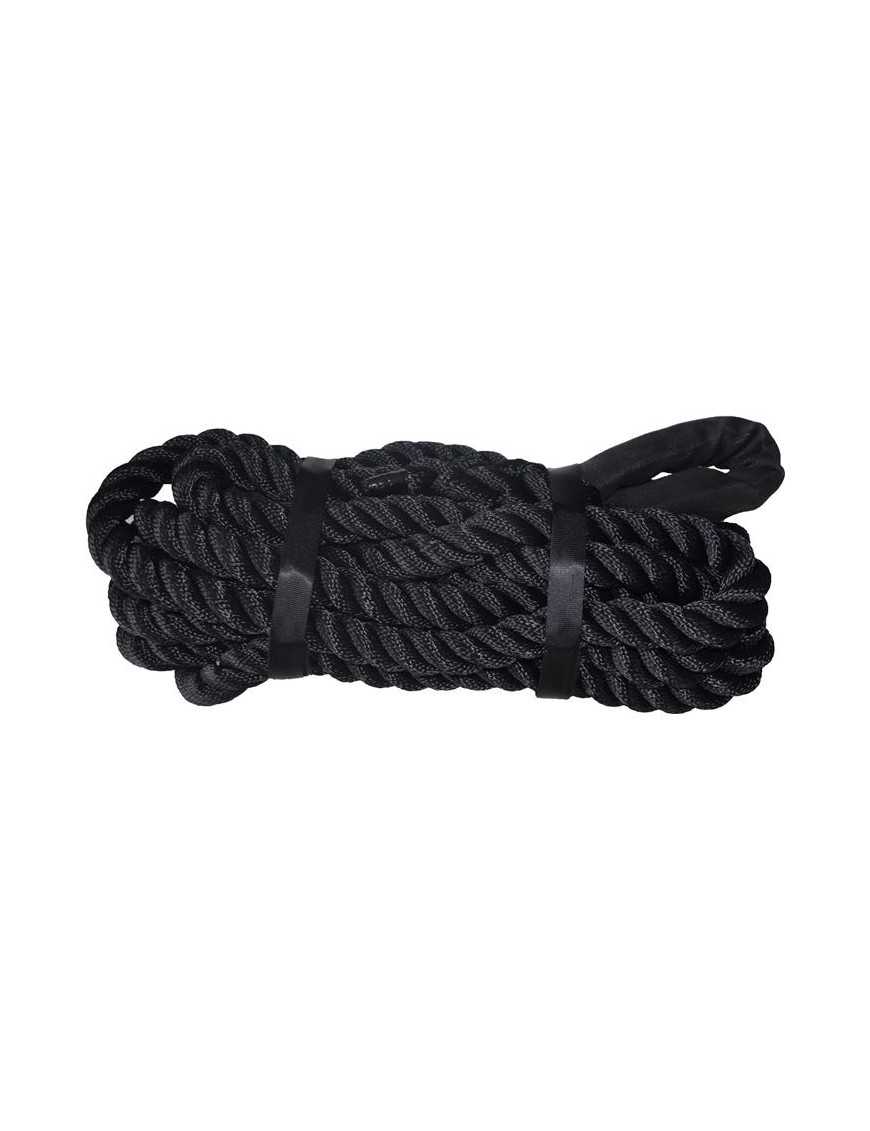
The SNL036 kinetic recovery rope (36 mm / 8 m / 25,000 kg) is designed for efficient vehicle recovery in mud, sand, or snow. Its elastic construction allows the rope to stretch and store kinetic energy, helping to smoothly pull a stuck vehicle using another car. Made from durable polyamide fibers and equipped with reinforced loops.


 Security policy
(edit with the Customer Reassurance module)
 Delivery policy
(edit with the Customer Reassurance module)
 Return policy
(edit with the Customer Reassurance module)
The SNL036 kinetic recovery rope is a durable recovery tool designed for pulling vehicles out of difficult terrain. Thanks to its elastic construction, the rope stretches under load, storing kinetic energy and then releasing it to help smoothly recover a stuck vehicle from mud, sand, or snow.
It is one of the most essential recovery accessories for any 4x4 vehicle, overland build, or off-road expedition setup. A kinetic rope allows a stuck vehicle to be recovered quickly using another vehicle, often without the need for a winch.
Unlike traditional tow ropes, a kinetic recovery rope is designed to stretch under load. During recovery, it can extend by up to 30% of its original length, storing energy that helps pull the stuck vehicle free in a smooth and controlled motion.
This elasticity reduces sudden shock loads and helps protect recovery points and vehicle components during the pulling process.
Kinetic ropes are particularly useful when recovering vehicles from:
The SNL036 kinetic rope is made from high-quality polyamide fibers, providing both strength and elasticity required for dynamic vehicle recovery. This material performs well in demanding off-road environments and offers resistance to moisture, UV exposure, and harsh conditions.
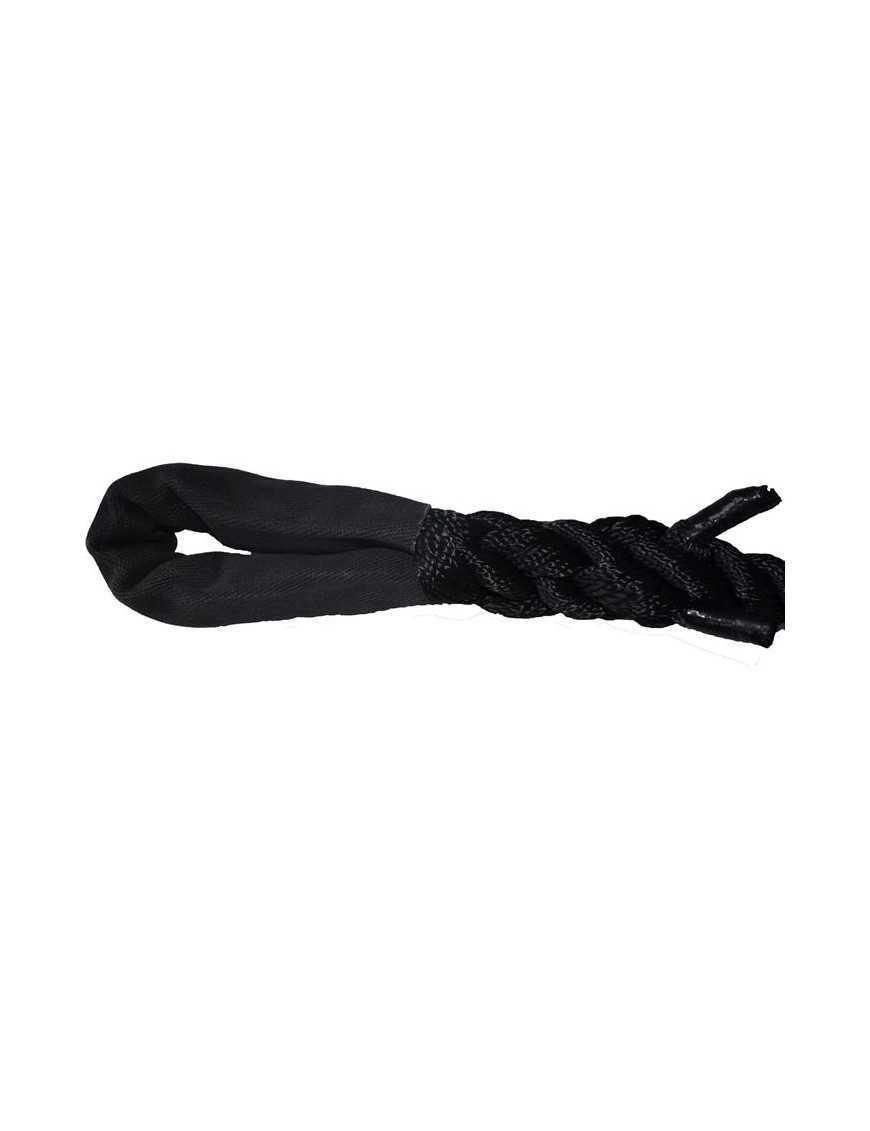
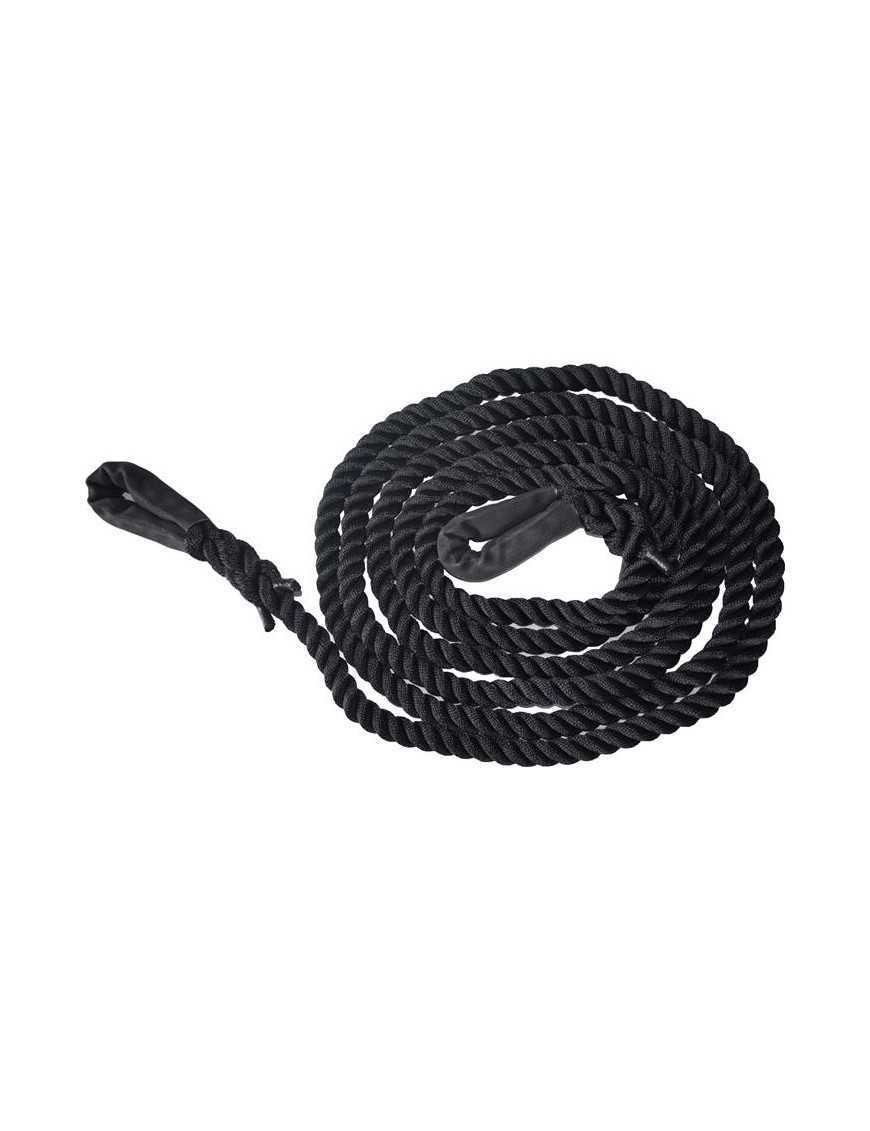
A strong three-strand braid construction increases durability, while reinforced loops at both ends allow fast and secure attachment to recovery points using shackles or soft shackles.
A kinetic recovery rope is one of the most effective tools for recovering vehicles in difficult terrain. With a second vehicle and proper recovery points, it allows drivers to quickly and safely pull a stuck vehicle out of mud, sand, or snow.
For this reason, kinetic ropes are considered a must-have item in any 4x4 recovery kit, especially for off-road enthusiasts, overlanding travelers, and professional off-road drivers.
A kinetic rope is used to recover stuck vehicles from mud, sand, or snow using another vehicle. Its elastic properties store energy during stretching and help pull the stuck vehicle free.
A kinetic rope stretches under load and releases stored energy to assist with recovery. A traditional tow rope is static and does not provide this dynamic pulling effect.
The rope should be attached to solid recovery points on both vehicles using shackles or soft shackles. The recovery vehicle then accelerates gently to allow the rope to stretch and transfer energy.
Yes, when used correctly. Its elasticity helps reduce sudden shock loads and minimizes stress on recovery points and vehicle components.
Steel rope has long been the standard choice for winches. Made from multiple strands of carbon steel wire, it offers excellent resistance to abrasion and generally comes at a lower cost than synthetic alternatives. Its main drawback is the tendency for individual wires to break over time, creating sharp burrs – meaning gloves are essential for safe handling.
Synthetic ropes, introduced to the market much later, are dramatically lighter – often up to ten times lighter than steel. Despite the lower weight, they can be incredibly strong, with some models offering breaking strengths up to seven times higher than comparable steel ropes. An often-overlooked advantage is that synthetic rope floats on water, making it extremely useful during river crossings and wet off-road conditions.
Unlike steel, synthetic rope doesn’t snap violently. It’s more flexible, and if damaged, it can be repaired in the field simply by tying a knot. This makes it a much safer option to use. On the downside, synthetic ropes cost more and are more susceptible to abrasion. However, for those willing to invest, they offer unmatched convenience and performance in challenging terrain.
The answer is simple – the fewer wraps on the drum, the more pulling power the winch can deliver. The exact amount of rope you can fit depends on the drum size. For example, a standard 12,000 lbs winch can typically hold about 28 m of 10 mm cable, or around 25 m if you go up to 12 mm. With these lengths, you need to pay close attention to how the rope is spooled to avoid pushing apart the crossbars that support the winch’s legs.
It’s the maximum load that a piece of equipment (like a strap, shackle, rope, or chain) is rated to handle during normal use. This value is set by the manufacturer based on safety factors, meaning the actual breaking strength of the equipment is higher, but you should never exceed the WLL in real-world operation.
Example: If a recovery strap has a WLL of 5 tons, it means you can safely use it for loads up to 5 tons under normal conditions.
The WLL is usually calculated as Breaking Strength ÷ Safety Factor. For lifting gear, the safety factor might be 4:1 or higher; for recovery gear, it can vary.
Key point: WLL is about safe working capacity, not the maximum it can physically hold before failure.
A marking such as 3 / 21 T on a recovery strap usually means:
3 T – the WLL (Working Load Limit) or safe working load of the strap. This is the maximum load that can be safely applied during regular use.
21 T – the breaking strength (also called ultimate strength or minimum breaking strength), which is the load at which the strap will fail in a controlled test.
In this example, the strap is rated for safe use at 3 tons, but in a laboratory test, it can withstand up to 21 tons before breaking. The difference between the two numbers comes from the safety factor applied by the manufacturer – in this case, 7:1 (21 ÷ 3 = 7).
Key point:
You should always work within the lower number (WLL) to maintain safety and prolong the life of your recovery gear. The higher number is there to indicate its ultimate tested strength, not the load you should use in real-world recovery.
Improved safety – when it breaks, it doesn’t store as much kinetic energy as steel, reducing the risk of injury.
Lightweight and easy to handle – often several times lighter than steel, with no sharp burrs to worry about; easier to spool in and out.
Field repairability – damaged rope can be rejoined or spliced without specialized equipment.
It floats – ideal for water crossings and wet environments.
Cons: more expensive, more vulnerable to UV exposure and dirt, and requires regular maintenance.
Safety margin – rope strength should be at least 1.5–2 times higher than your winch’s maximum rated pull.
Balance between diameter and length – thicker rope is stronger but takes up more drum space; sometimes a shorter main rope with an extension is the best option.
Avoid overfilling the drum – too much rope can damage winch components and reduce pulling efficiency.
Commonly made from HMPE fibers (such as Dyneema), polyester, or nylon – all highly resistant to moisture, corrosion, and offering exceptional strength.
Rope construction (e.g., 12-strand braid) affects durability, abrasion resistance, and how easily it picks up dirt.
may require the use of different winching techniques.
This could include situations such as too short a distance to achieve maximum pull using a straight-line setup,
or the need to increase pulling power or maintain the rope in a straight-line pull.
You must assess which technique is appropriate for your situation.
Always remember to think safety first.
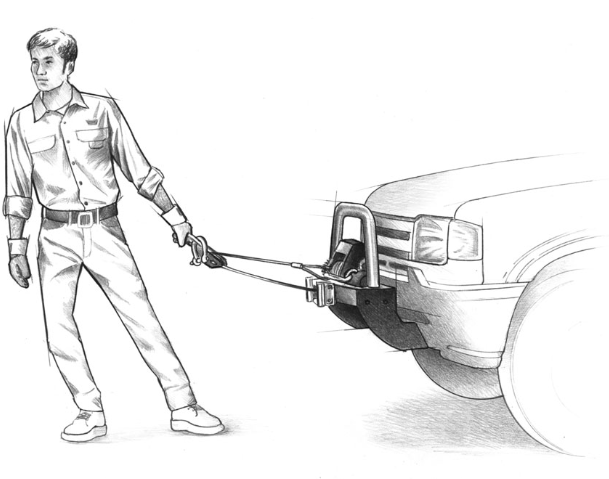
When winching, it’s best to keep the rope running in a straight line from the winch to the object being pulled. This ensures even spooling on the drum, improves efficiency, and reduces the risk of rope damage.
Using a snatch block attached to a point directly in front of the vehicle allows you to change the pulling direction while keeping a 90° angle between the rope and the drum. This ensures the rope spools properly during operation.
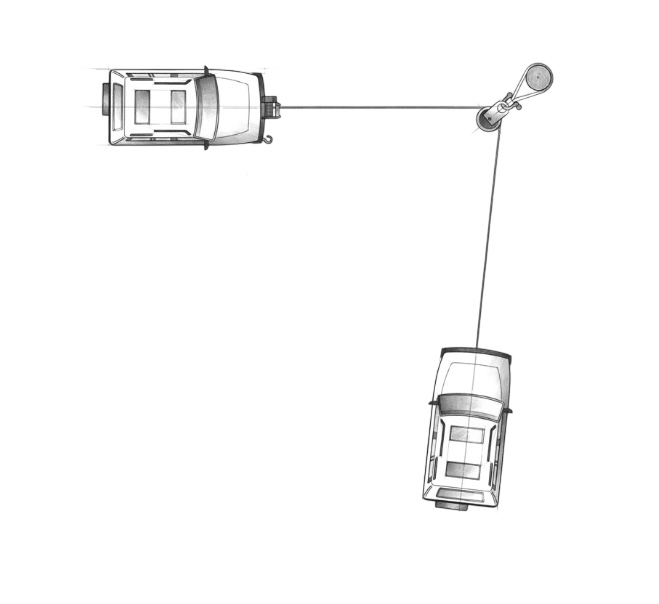
In some situations, you may find you need more pulling power.
Using a snatch block provides mechanical advantage, which directly translates into increased winching power.
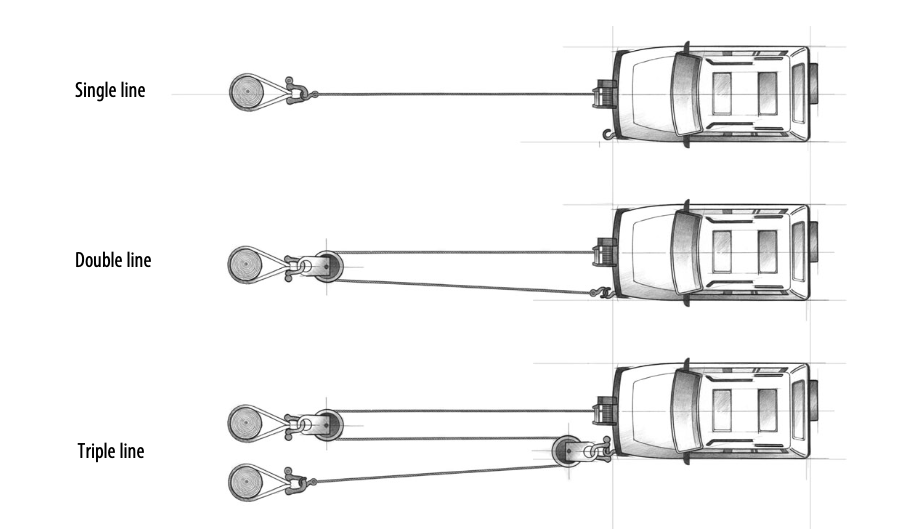
Winch pulling power decreases as the number of rope layers on the drum increases.
Using a snatch block in a double-line setup allows you to pull out more rope from the drum, reducing the number of layers and increasing pulling power.
Step-by-step:
Spool out enough winch rope to free the hook.
Attach the hook to the vehicle’s frame or tow point, then pass the rope through the snatch block.
Disengage the winch clutch and, using the snatch block, pull out enough rope to reach the anchor point.
Do not attach the hook to the winch mounting bracket.
Secure the rope to the anchor point using a tree saver strap or a choker chain.
Attach a shackle to both ends of the strap or chain, making sure not to overtighten – tighten and then back off half a turn.
Similar to the double-line setup – as shown in the diagram – except the rope end is routed through two snatch blocks, with the third point being, for example, a tree.
What is a roller fairlead for a winch?
A roller fairlead consists of four steel or aluminum rollers that guide the rope during winching. It is mainly used with steel cables because it reduces friction and prevents excessive wear when winching at an angle.
What is a hawse fairlead?
A hawse fairlead is a smooth plate, usually made of aluminum or steel, with a rounded opening through which the rope passes. It is designed specifically for synthetic ropes – minimizing wear and protecting them from abrasion.
Which option is better for synthetic rope?
For synthetic rope, a hawse fairlead is strongly recommended because:
It has a smooth surface that won’t damage the rope fibers.
It has no moving parts that could pinch or fray the rope.
It’s lighter and more compact than a roller fairlead.
Can you use roller fairleads with synthetic rope?
Yes, but only if they are in perfect condition – with no sharp edges, rust, or pitting. Even minor damage to the roller surface can cut or weaken synthetic rope.
Can you use a hawse fairlead with steel cable?
It’s not recommended. Steel cable combined with a hawse fairlead generates more friction, wears it out faster, and can cause serious damage when winching at an angle.
A kinetic rope stretches and releases stored energy, making vehicle recovery easier and smoother. A standard tow rope transfers the pulling force directly, without shock absorption.
No — it provides a safe strength margin. In off-road conditions, real recovery loads are often much higher than the vehicle’s actual weight.
Gruba, solidna lina. Polecam.
Już zgłoszone
The SNL036 kinetic recovery rope (36 mm / 8 m / 25,000 kg) is designed for efficient vehicle recovery in mud, sand, or snow. Its elastic construction allows the rope to stretch and store kinetic energy, helping to smoothly pull a stuck vehicle using another car. Made from durable polyamide fibers and equipped with reinforced loops.
