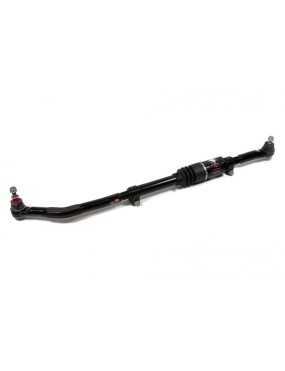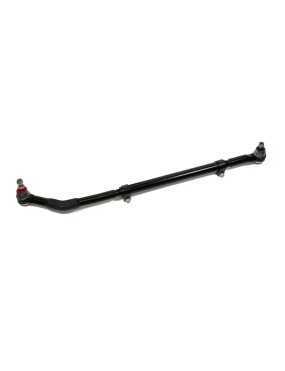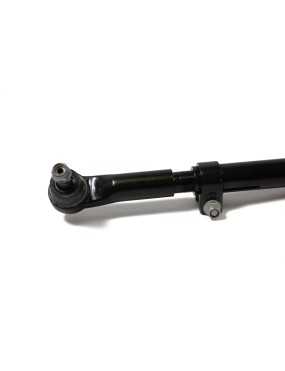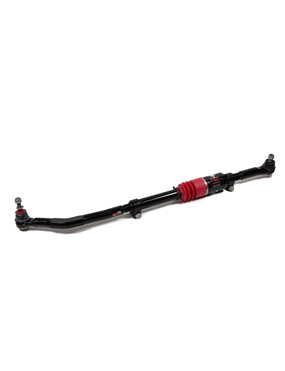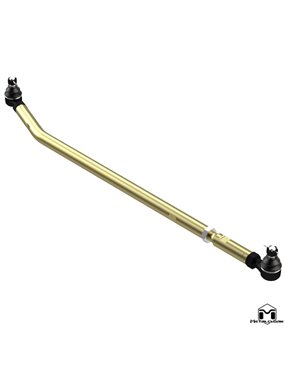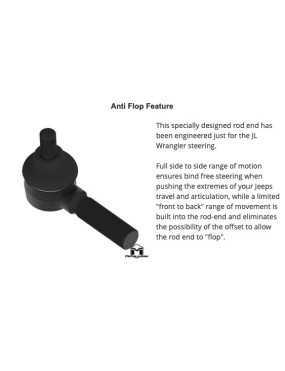
Should I use a Bottom or Top Mount Drag Link?
Bottom Mount vs. Top Mount Drag Link
Choosing between a bottom mount and top mount drag link depends mainly on your Jeep’s lift height and intended use. Bottom mount maintains factory geometry and works best for stock or mildly lifted vehicles, offering simple installation and reliable on-road performance. Top mount (high steer) is better suited for heavily lifted Jeeps, improving steering angles, reducing bump steer, and increasing ground clearance for demanding off-road conditions.
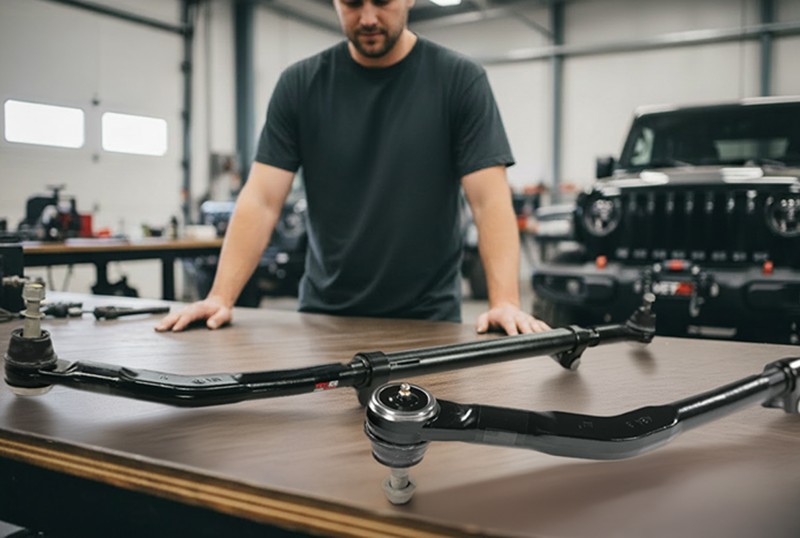
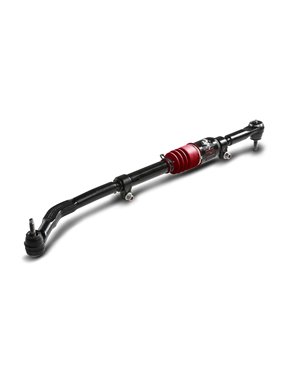
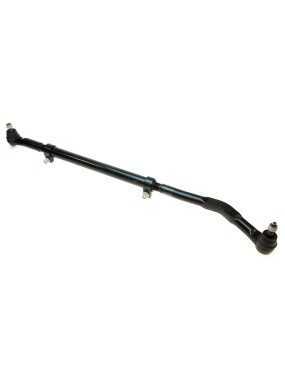
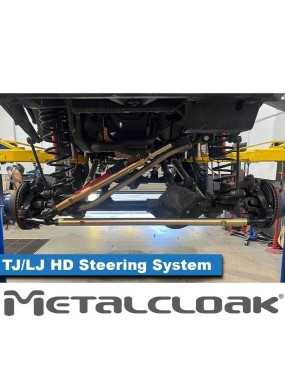
When upgrading or maintaining the steering system in your Jeep, one of the most critical components is the drag link. It connects the pitman arm to the steering knuckle and directly influences steering precision, stability, and overall driving feel.
In models such as Jeep Wrangler JK, Jeep Wrangler JL, and Jeep Gladiator JT, two primary drag link mounting configurations are commonly discussed:
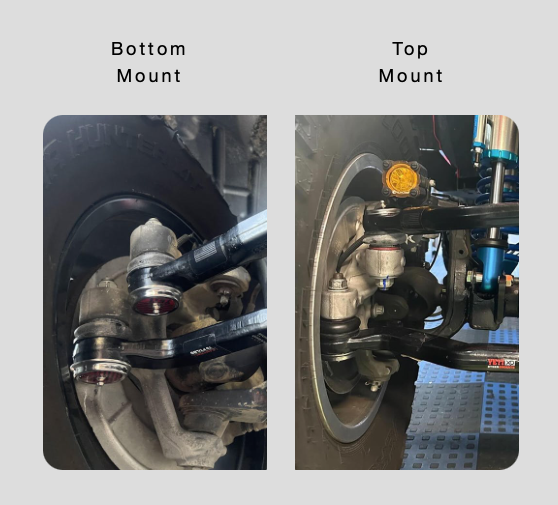
- Bottom Mount
- Top Mount (often referred to as “high steer” or “drag link flip”)
So which one is right for your build? The answer depends on lift height, intended use, and how far you plan to go with modifications.
What’s the Difference Between Bottom Mount and Top Mount?
Bottom Mount – The Factory Configuration
In a bottom-mount setup, the drag link attaches to the underside of the steering knuckle. This is the factory-standard configuration on most Jeep models.
Key advantages:
- Maintains factory steering geometry
- Straightforward installation
- No modification to steering knuckles required
- Works perfectly with stock or mild lift setups
This configuration is ideal for daily-driven Jeeps and vehicles running up to approximately 3–3.5 inches of lift.
Top Mount – High Steer Configuration
With a top-mount setup, the drag link attaches to the top of the steering knuckle. This modification is common in lifted Jeeps to improve steering geometry.
Main benefits:
- Flattens the drag link angle on taller lifts
- Reduces bump steer
- Improves ground clearance and protection from obstacles
However, top mount setups often require:
- Track bar relocation to maintain proper geometry
- Careful alignment adjustments
- Precise installation
For JK models, top mount generally makes sense with higher lift heights. On JL and JT platforms, it’s typically recommended for lifts around 4.5 inches or more.
Why Bottom Mount Is Often the Smarter Choice
1️⃣ Simpler Installation, Fewer Modifications
A bottom-mount drag link installs without additional brackets or knuckle modifications. This means:
- Less labor
- Lower overall cost
- Reduced risk of improper geometry
Top mount configurations must maintain proper parallel angles between the drag link and track bar to prevent bump steer or axle shift.
2️⃣ Ideal for Stock or Mild Lifts
If your Jeep runs:
- Stock suspension
- Or up to about 3–3.5 inches of lift
Bottom mount maintains optimal steering geometry without unnecessary complexity. In fact, converting to top mount on a mild lift can sometimes negatively affect steering dynamics.
3️⃣ Reliable and Predictable Performance
For Jeeps that spend most of their time:
- On-road
- On gravel
- On moderate trails
A bottom-mount configuration delivers stable, predictable handling with excellent durability.
When Top Mount Makes Sense
Top mount becomes advantageous when:
- Lift height exceeds 4 inches
- The vehicle is built for serious off-road use
- Maximum front axle clearance is required
- You are correcting steering geometry on a heavily lifted suspension
In aggressive off-road builds, improved angles and added clearance can make a significant difference.
What to Look for in a Quality Drag Link
Regardless of configuration, pay attention to:
- Material quality (e.g., chromoly steel)
- Diameter and wall thickness
- Heavy-duty tie rod ends
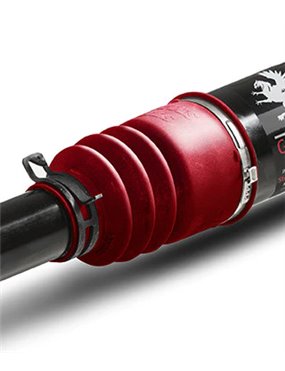
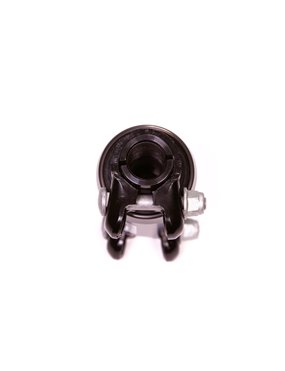
- Serviceability (grease fittings)
- Compatibility with your specific lift height
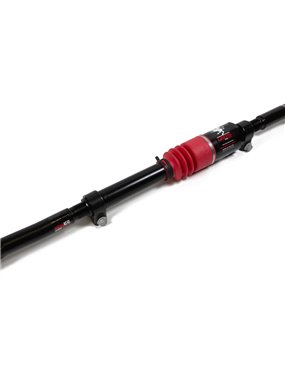
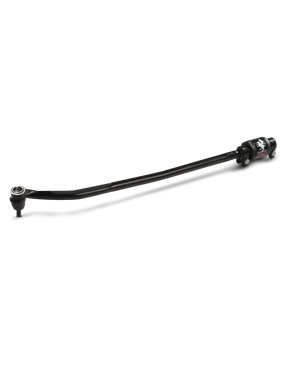
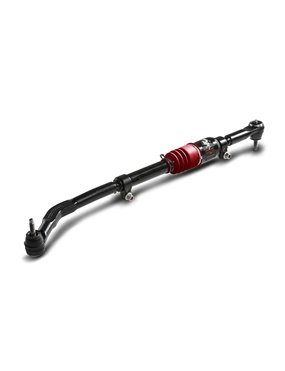
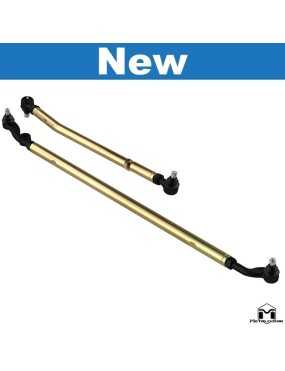
Upgrading to a heavy-duty drag link is one of the most important steering improvements for off-road Jeeps, increasing both durability and steering precision.
Final Thoughts: Match Your Steering to Your Adventure
Choosing between bottom mount and top mount ultimately comes down to:
- Lift height
- Vehicle usage
- Budget
- Willingness to modify
If your Jeep is stock or mildly lifted and sees daily driving duties, bottom mount is often the most practical and reliable solution.
If you’re building a high-lift, trail-focused rig, top mount may provide meaningful improvements in geometry and clearance.
There’s no one-size-fits-all answer in the off-road world. The key is selecting a steering setup that complements your build and driving style—so your Jeep performs confidently both on pavement and on the trail.